September 06, 2008

What happened to Friday

I didn't know that Daniel Defoe published a sequel to Robinson Crusoe. It's called The Farther Adventures of Robinson Crusoe.

Before I discuss it, let's note how Robinson Crusoe ends. Crusoe, Friday, and an English captain overcome the sailors who planned to maroon the captain. After that...the book doesn't mention Friday again. Crusoe takes leave of his island...and doesn't even say whether Friday goes with him.

In The Farther Adventures of Robinson Crusoe, the first paragraphs tell us that Crusoe has married and had three children. But he misses his island and then his wife dies. Seven years after returning home, he sets sail again.

Back to the island

As he departs, he finally mentions that Friday is accompanying him. So Friday journeyed to England and spent seven years as what...Crusoe's manservant? There's a story for you: how the inhabitants of a small English farm town reacted to a "wild" Indian in their midst.

This lack of detail shows that Defoe didn't consider Friday a real character. Friday was a prop that existed so Defoe/Crusoe could teach him (and us) his Puritan moralism and Protestant work ethic. He completed that task in the first book, so (as we'll see) Friday is no longer necessary.

Crusoe returns to his island. He deals with the Englishmen and Spaniards he left there along with the local Indians. Friday gets exactly one paragraph of dialog. I think Crusoe mentions Friday's unnamed father more than he does Friday. And he starts calling his companion "old Friday" even though Crusoe must be a good 20 years older.

Finally Crusoe and Friday leave the island for the Brazilian mainland. They spot an oncoming fleet of Native canoes. Here's what happens (from the text itself):I made Friday go out upon the deck, and call out aloud to them in his language, to know what they meant. Whether they understood him or not, that I knew not; but as soon as he had called to them, six of them, who were in the foremost or nighest boat to us, turned their canoes from us, and stooping down, showed us their naked backs; whether this was a defiance or challenge we knew not, or whether it was done in mere contempt, or as a signal to the rest; but immediately Friday cried out they were going to shoot, and, unhappily for him, poor fellow, they let fly about three hundred of their arrows, and to my inexpressible grief, killed poor Friday, no other man being in their sight. The poor fellow was shot with no less than three arrows, and about three more fell very near him; such unlucky marksmen they were!

I was so annoyed at the loss of my old trusty servant and companion, that I immediately ordered five guns to be loaded with small shot, and four with great, and gave them such a broadside as they had never heard in their lives before.
Yes, how annoying it must've been for Crusoe to lose his faithful Indian sidekick. Good help is so hard to find.

Farewell to Friday

To be fair, Crusoe expresses a modicum of emotion a few paragraphs later:And now I name the poor fellow once more, I must take my last leave of him. Poor honest Friday! We buried him with all the decency and solemnity possible, by putting him into a coffin, and throwing him into the sea; and I caused them to fire eleven guns for him. So ended the life of the most grateful, faithful, honest, and most affectionate servant that ever man had.And...that's it for Friday. Crusoe never mentions or thinks of him again.

Crusoe goes on to have adventures in Madagascar, Southeast Asia, China, and Siberia (!). I gather he walks, rides, and sails all the way across Russia till he returns to Europe and England.

It's Marco Polo all over again--and improbable, to say the least. I guess Defoe didn't have time to publish a second sequel, Robinson Crusoe on Mars.

For more on the subject, see The Best Indian Books.

Didgeridoo and flute duet

Into the world of Aboriginal Australia

Didgeridoo player Ash Dargan and Native flutist Morgan Fawcett to performMusic. Didgeridoo. Imagery. Aboriginal culture.

These are some of the elements of Ash Dargan's multimedia show, "Territory: Journeys into Dreamtime," which he will present in a concert alongside Native American flute player Morgan Fawcett at 7 p.m. on Sunday, Sept. 7.

The show is a benefit for the Fetal Alcohol Spectrum Disorder Diagnostic Clinic, which is hosting a week-long campaign to raise awareness of Fetal Alcohol Spectrum Disorder. FASD covers a range of disabilities associated with prenatal exposure to alcohol, and includes Fetal Alcohol Syndrome.

"I'm a storyteller. I play the didgeridoo and I translate the living soul of the landscape of my country through a deeply traditional and cultural lens," Dargan said.

Dargan is an Aborigine from the Larrakia tribe in the Northern Territory of Australia. His show mixes music, storytelling and video images with both modern and traditional elements to offer the listener or viewer a deeper view of his homeland.

"I play the story and I show the story. It's like a three-dimensional sensory experience and it's all about indigenous culture in Australia," Dargan said.

Jim Thorpe, Pennsylvania

Here's an oddity of pop culture: a town named after an Indian who has no connection to the place.

Jim Thorpe, PennsylvaniaJim Thorpe is a borough in Carbon County, Pennsylvania, USA. The population was 4,804 at the 2000 census. It is the county seat of Carbon County. The town has been called the "Switzerland of America" due to the picturesque scenery, mountainous location, and architecture; as well as the "Gateway to the Poconos."

Mauch Chunk was founded in 1818 by the Lehigh Coal & Navigation Company. It rapidly became a railroad and coal-shipping center, and was home to the Mauch Chunk Switchback Gravity Railroad, generally acknowledged as the first roller coaster in the United States. The city was the location of the trial of the Molly Maguires in 1876, which resulted in the hanging of four men found guilty of murder. The population in 1900 was 4,020; in 1910, it was 3,952.

Following the 1953 death of renowned athlete and Olympic medal winner Jim Thorpe, the boroughs of Mauch Chunk and East Mauch Chunk merged and adopted the name of Jim Thorpe in hopes of attracting attention and tourism to bolster the local post-industrial economy. The township bought the athlete's remains from his third wife and erected a monument to the Oklahoma native, who began his sports career as a student in Carlisle, PA (2 hours southwest, near Harrisburg).

Minority Small Business Person of the Year

Pasco man named 'Minority Small Business Person of Year'A Pasco businessman has been recognized by the U.S. Small Business Administration Seattle District.

Stuart W. Fricke is president and owner of White Shield Inc., a consulting firm that provides land surveying, mapping, environmental consulting, and industrial health and safety services around the Northwest.

He has received the 2008 Minority Small Business Person of the Year award for the SBA Spokane Branch.

Fricke is a Native American and member of the Arikara Tribe from the Fort Berthold Reservation in North Dakota.

September 05, 2008

Wrapping up the RNC

Republican Natives react favorably to Palin VP selection"I am delighted by her selection," said Jana McKeag, a co-chair of American Indians for McCain Coalition who attended the convention. "I think she brings a fresh face to the party, and she's a go getter. She's always looking at how to fix things. And we still have a lot of things out there in Indian country that need to be fixed."

Added McKeag, a member of the Cherokee Nation of Oklahoma: "We need strong leadership for this country that is familiar with Indian country. Both Sen. McCain and Gov. Palin can hit the ground running."

Indian supporters of the McCain/Palin ticket said they were pleased to have not one, but two, candidates running from states with large Native constituencies. The senator from Arizona presided over the U.S. Senate Indian Affairs Committee for several years, while Palin leads a state that contains more than 225 of the 560-plus federally-recognized tribes in the U.S.

Talk amongst Indian RNC attendees also centered on tribal history involving President Richard Nixon, whose initiative on Native economic development was operated largely through his vice president's office.

On specific tribal issues, especially healthcare improvement, Republican Indians were quick to say that McCain and Palin could bring change--and blamed certain Democrats for lack of action in recent times.

GOP attendees of the convention said they see the main holdup to getting the Indian Healthcare Improvement Act passed this year as being Democratic House Speaker Nancy Pelosi, who is not happy with the pro-life provisions of the bill.
American Indians for McCain Coalition debuts at GOP conventionJohn McCain's presidential campaign announced the leaders of the American Indians for McCain Coalition at a Sept. 3 meeting in St. Paul, in time for the two-month home stretch to the November presidential election.

It is perceived that Democrats greatly outnumber Republicans in Indian country, and John McCain's Democratic rival, Barack Obama, has pressed that perception for months now. But when McCain finally raised the flag for his Republican supporters in Indian country, they included a roster of influential figures.

At the top of the coalition's membership are Ben Nighthorse Campbell, Northern Cheyenne, the retired Republican senator from Colorado, and Rep. Tom Cole from Oklahoma, Chickasaw, the only enrolled tribal citizen in Congress.

Both issued statements of support for their party leader.

"John McCain has served on the Indian Affairs Committee since the first day he joined the U.S. Senate 22 years ago, twice serving as its chairman," said Campbell, himself a former chairman of the committee in a release. "He serves there not because he has to, but because he chooses to. He doesn't need to be educated on tribal issues, he has been working hard on behalf of Native people for a long time. John McCain is a man of honor and he will be a great President for Indian country, and all Americans."

Cole, in the same release, added, "Senator John McCain has been a leading advocate in Congress on tribal issues for over two decades. He has introduced and championed more legislation on behalf of tribes than any other member of Congress. He knows tribal issues and, as President, he will continue to fight for tribes and uphold tribal sovereignty."
GOP platform includes Native-specific language and goalsDelegates and leaders of the Republican National Convention have approved a national party platform for the next four years that includes several Indian-focused provisions.

Under a section in the 67-page document titled, "Supporting Native American Communities," the platform states that the "federal government has a special responsibility to the people in Indian country and a unique trust relationship with them, which has been insufficiently honored.

"The social and economic problems that plague Indian country have grown worse over the last several decades, and we must reverse that trend. Ineffective government programs deprive Indians of the services they need, and longterm failures threaten to undermine tribal sovereignty itself."

The platform, which amounts to a GOP roadmap of principles and goals for the next four years, says that Republicans believe that economic self-sufficiency is the ultimate answer to the challenges in Indian country and that tribal communities, not Washington bureaucracies, are better situated to craft local solutions.

"Federal--and state--regulations that thwart job creation must be reconsidered so that tribal governments acting on Native Americans' behalf are not disadvantaged."

The document states that the "Democratic Party's repeated undermining of tribal sovereignty to advantage union bosses is especially egregious."

"Republicans reject a one-size-fits-all approach to federal-state-tribal partnerships and will work to expand local autonomy where tribal governments seek it," according to the platform. "Better partnerships will help us to expand opportunity, deliver top-flight education to future generations, modernize and improve the Indian Health Service to make it more responsive to local needs, and build essential infrastructure."
In contrast, here's what the Democratic platform says:Democrats, at their recent convention in Denver, reaffirmed the importance of tribal sovereignty and stated that the "Democratic Party will honor the nation's treaty and trust obligations by increasing resources for economic development, health care, Indian education and other services."

The Democratic platform contained several notations of tribal issues throughout, such as recognizing a need to reduce disparities in health care for Natives in a culturally-sensitive manner. It also promised federal consultation with tribes on homeland security issues.

One stark contrast between the RNC and DNC platforms is that the Republican document does not include language promising to create a position for a White House advisor on Indian affairs, nor does it propose to hold annual summits between top federal political leaders and tribal leaders.
Comment:  The Republican platform is replete with buzzwords such as autonomy and empowerment. These are the same buzzwords the Bush administration has employed for the last eight years. Most Indians feel this administration has done little or nothing for them. McCain promises more of the same.

Republicans say the choice is between tribal communities and Washington bureaucracies. This is a lie since Democrats aren't calling for new bureaucracies. Democrats say the choice is between tribal communities with more resources and tribal communities with fewer resources. They know that when Republicans talk about getting out of the way, it means cutting the tribes' budgets and going home.

As usual, Republicans can't tell the truth if their lives depend on it. Which party has controlled Congress and the presidency for most of the last eight years? That's right, the GOP. But Democrats are to blame for the Bush administration's lack of accomplishments? Because they've oppose conservative attempts to control women's bodies in the last few months? Yeah, right.

If there are any Republicans who take responsibility for the Bush administration's failure to act in the last eight years, I haven't heard them. Hence we have McCain praising Bush to the hilt and then calling for change. And completely ignoring the fact that the Bush/McCain government is what needs to be changed. Heal thyself, old man.

About the only nugget of truth in these postings is that Democrats sometimes take the side of unions against tribes. When that threatens tribal sovereignty, as it often does, that's wrong. Indians should ask how the candidates stand on the recent National Labor Relations Board decision--the one that's forcing sovereign tribes to negotiate with unions.

As for all the things McCain has done for Indians, see What Has McCain Done Lately? The short version is that he's stood by while the Bush administration wasted government revenues on tax cuts and the war on Iraq rather than funding Indian services.

Below:  The POW braggart and Phyllis Schlafly Jr.

Friday analyzed

Considering Defoe wrote Robinson Crusoe in 1719, Friday is a good character. He's arguably as good as Jim in Mark Twain's Huckleberry Finn. Jim is considered a breakthrough in the realistic portrayal of nonwhite characters in English-language novels. But Friday was there first, 166 years earlier.

Robinson CrusoeFriday--A twenty-six-year-old Caribbean native and cannibal who converts to Protestantism under Crusoe's tutelage. Friday becomes Crusoe's servant after Crusoe saves his life when Friday is about to be eaten by other cannibals. Friday never appears to resist or resent his new servitude, and he may sincerely view it as appropriate compensation for having his life saved. But whatever Friday's response may be, his servitude has become a symbol of imperialist oppression throughout the modern world. Friday's overall charisma works against the emotional deadness that many readers find in Crusoe.Friday (In-Depth Analysis)Probably the first nonwhite character to be given a realistic, individualized, and humane portrayal in the English novel, Friday has a huge literary and cultural importance. If Crusoe represents the first colonial mind in fiction, then Friday represents not just a Caribbean tribesman, but all the natives of America, Asia, and Africa who would later be oppressed in the age of European imperialism. At the moment when Crusoe teaches Friday to call him “Master” Friday becomes an enduring political symbol of racial injustice in a modern world critical of imperialist expansion. Recent rewritings of the Crusoe story, like J. M. Coetzee's Foe and Michel Tournier's Friday, emphasize the sad consequences of Crusoe's failure to understand Friday and suggest how the tale might be told very differently from the native's perspective.

Aside from his importance to our culture, Friday is a key figure within the context of the novel. In many ways he is the most vibrant character in Robinson Crusoe, much more charismatic and colorful than his master. Indeed, Defoe at times underscores the contrast between Crusoe's and Friday's personalities, as when Friday, in his joyful reunion with his father, exhibits far more emotion toward his family than Crusoe. Whereas Crusoe never mentions missing his family or dreams about the happiness of seeing them again, Friday jumps and sings for joy when he meets his father, and this emotional display makes us see what is missing from Crusoe's stodgy heart. Friday's expression of loyalty in asking Crusoe to kill him rather than leave him is more heartfelt than anything Crusoe ever says or does. Friday's sincere questions to Crusoe about the devil, which Crusoe answers only indirectly and hesitantly, leave us wondering whether Crusoe's knowledge of Christianity is superficial and sketchy in contrast to Friday's full understanding of his own god Benamuckee. In short, Friday's exuberance and emotional directness often point out the wooden conventionality of Crusoe's personality.

Despite Friday's subjugation, however, Crusoe appreciates Friday much more than he would a mere servant. Crusoe does not seem to value intimacy with humans much, but he does say that he loves Friday, which is a remarkable disclosure. It is the only time Crusoe makes such an admission in the novel, since he never expresses love for his parents, brothers, sisters, or even his wife. The mere fact that an Englishman confesses more love for an illiterate Caribbean ex-cannibal than for his own family suggests the appeal of Friday's personality. Crusoe may bring Friday Christianity and clothing, but Friday brings Crusoe emotional warmth and a vitality of spirit that Crusoe's own European heart lacks.
Comment:  Not only is Friday better than Twain's Jim, he's better than Mel Gibson's Maya, Larry McMurtry's Comanches, et al. After three centuries, not that much has changed, unfortunately.

For more on the subject, see The Best Indian Books.

The power behind Palin?

Native 'first dude' holds power

Is Todd Palin the next LaDonna Harris?Some of Gov. Palin's critics have questioned why Todd Palin is involved in the governor's official correspondence. After all, he's not a politician, nor does he have government credentials of any sort. Rather, he's an award-winning snowmobiler, fisherman and an oil-field production operator on Alaska's North Slope.

Of special note to Indian country, Alaska's first gentleman is also of Yup'ik Eskimo descent, and Gov. Palin has cited her husband's and children's Alaska Native heritage as signs that she is committed to and well-versed on Native issues. The governor commonly refers to her husband as Alaska's "first dude."

Given his closeness to the governor, not all Indians view Todd Palin's fingerprints in the governor's dealings as such a bad thing. Some said it would be especially helpful if he could help the general public understand more about tribal issues, especially those surrounding Alaska Native Corporations.

The corporations were established in 1971 after Congress passed the Alaska Native Claims Settlement Act, which settled land and financial claims made by Alaska Natives and provided for the establishment of 13 regional corporations to administer those claims. Many non-Indians have had grievances about the corporations and some have argued that economic benefits have not been widely dispersed throughout the state, although studies have found otherwise.

"There's always a need to spread more knowledge about our issues, and Todd Palin is an excellent resource--I'm sure he will be involved in some way in her campaign for vice president," said Jana McKeag, a co-chair of American Indians for McCain Coalition.

"It's all about access, whether it's through a spouse, or not--the more important fact is that [McCain and Palin] care and have proactive records on Indian issues."

There is precedent for positive developments happening for Indian country at times when powerful federal officials have had Native spouses.

It's well-known that non-Indian former Democratic Sen. Fred Harris from Oklahoma placed strong emphasis on issues affecting American Indians during his terms in office. His wife is LaDonna Harris, of Comanche descent; she and her daughter, Laura Harris, continue to have strong voices in the Democratic Party.

"There's no doubt Frank made Indian issues a priority because he had a tough Comanche wife," said former Republican Colorado Sen. Ben Nighthorse Campbell, a leader with the Northern Cheyenne Indian Tribe.

Nighthorse Campbell expects that Todd Palin, too, would have an influence on his wife's policies and beliefs involving Indian country issues, especially if she were elected to higher office.

"If you're not listening to your spouse, you're not being a very good spouse yourself," said Nighthorse Campbell.
Below:  Palin and his children, including pregnant 17-year-old Bristol. For some reason, the party of hypocrisy has dropped its adamant opposition to teenage and out-of-wedlock pregnancies.

Sold-out casino shows

TEMECULA:  Music legend Dylan performs at Pechanga

Fans young and old thrilled to see icon perform close to homeBob Dylan, the iconic musician dubbed "the" folk singer-songwriter of the 1960s protest movement," performed Thursday night at Pechanga Resort & Casino.

It wasn't surprising that Dylan played to a packed house of 1,200 inside the casino's showroom; it wasn't even surprising that both presale tickets and general public tickets sold out in a combined 24 minutes.

What was surprising to many Dylan fans was that the music legend was even performing in Southwest County.

"My father-in-law called and said, 'You gotta see Bob Dylan once in your life,'" Temecula resident John Balland, 45, said. "This is a real treat to be able to see him here in town. I've been listening to him all my life. It is amazing."
Miley Cyrus Foxwoods Show Sold OutMore than 3,000 people registered to buy tickets to the Sept. 27 Miley Cyrus concert at MGM Grand Theater at Foxwoods, and the show was sold out by the end of the first day of sales on Wednesday.

For the first time, Foxwoods initiated an online registration process designed to minimize ticket-scalping, and it “worked very well,” according to Bruce Flax, director of tickets for Foxwoods and MGM Foxwoods.

“If you look on well known scalper web sites as of (Thursday) morning, you can see 200 to 300 tickets for sale for Miley’s show in California,” Flax said, “and none for our show.”
Comment:  Bob Dylan and Miley Cyrus...two giants of American music. Available for you thanks to your friendly neighborhood Indian casino.

Nighthorse Campbell snubbed?

Ball of confusionThe next time the Republican Party holds a national convention, planners might want to check in more than 48 hours in advance with one of the nation's more powerful Indian leaders about their desire for him to speak at the convention.

Former Sen. Ben Nighthorse Campbell, Northern Cheyenne Tribe, told Indian Country Today that he was unable to make it to the Republican National Convention this year because schedulers of the event only gave him two days notice beforehand that they wanted him to attend.

RNC planners had wanted him to give a speech on tribal issues and to talk about the importance of the Indian vote. But Nighthorse Campbell was already scheduled to be at a business summit and other meetings.

"I just couldn't make it," Nighthorse Campbell said with a sigh. "I just had other commitments by that point in time."
Comment:  This is a rather silly "controversy." If Campbell wanted to go, why didn't he keep his schedule clear? He knew when the convention was.

For that matter, why didn't he contact the schedulers himself? This attitude that he had to wait for an invitation like a belle at a ball is ridiculous.

If it was important enough to Campbell, he would've found a way to be there. Period.

Which isn't to excuse the RNC's planners. Obviously, they should've invited Campbell weeks or months in advance. But these are the same people who projected an image of Walter Reed Middle School, not Walter Reed Army Medical Center, behind John McCain. They aren't the swiftest boats in the ocean.

Powwow counters stereotypes

Pow-wow counters Hollywood stereotypes of Native AmericansWilkins, who is Mashpee Wampanoag on her mother’s side and Haliwa-Saponi on her father’s side, said there’s a lot that people can learn about Native Americans if they go into the pow-wow with “open eyes, open ears and an open heart.”

“I think it’s a great family-oriented event,” said Wilkins, who hopes the pow-wow will help knock down hurtful stereotypes that people may hold about Native Americans. “A lot of people come and bring their kids, and that’s important. Especially at a young age, to expose them to other cultures so they don’t grow up with all kinds of misconceptions and Hollywood-centric views of Native Americans.

“The Hollywood stereotype is one of our biggest bugaboos because that’s what people see, that’s what they believe and that’s all they think exists,” she added. “And obviously that’s not exactly true. It’s an uphill push sometime, but we’ve got to keep pushing because it’s important.”
Comment:  How obvious it is that Hollywood stereotypes are one of the biggest problems facing Native people. These Natives understand that, even if others don't.

For more on the subject, see The Harm of Native Stereotyping:  Facts and Evidence.

Flying Elvi at Pojoaque

New resort opens at Pojoaque with Vegas-like flareThe Flying Elvi leapt from their plane a couple of minutes early to beat the dark rain clouds that threatened from above Pojoaque Pueblo's new resort.

At first, the skydivers appeared as mere specks to the 500 gathered for Wednesday's grand opening of the Buffalo Thunder Resort & Casino.

But as they opened their stunt parachutes and soared toward the parking lot, their white jumpsuits with red trim, gold-framed sunglasses and black helmets shaped like Elvis Presley hairdos left no doubt who they were impersonating.

Marketers for the new Hilton-managed hotel-casino-resort were hoping their presence would lend some Las Vegas, Nev.-style glitter to the once-sleepy Pojoaque Valley.
Comment:  For more on the subject, see The Facts About Indian Gaming.

September 04, 2008

Polynesians brought chickens

I reported on this subject back in Polynesians Were Here First. Now it's come up again.

Polynesians beat Columbus to the AmericasPrehistoric Polynesians beat Europeans to the Americas, according to a new analysis of chicken bones.

The work provides the first firm evidence that ancient Polynesians voyaged as far as South America, and also strongly suggests that they were responsible for the introduction of chickens to the continent--a question that has been hotly debated for more than 30 years.

Chilean archaeologists working at the site of El Arenal-1, on the Arauco Peninsula in south-central Chile, discovered what they thought might be the first prehistoric chicken bones unearthed in the Americas. They asked Elizabeth Matisoo-Smith at the University of Auckland, New Zealand, and colleagues to investigate.

The group carbon-dated the bones and their DNA was analysed. The 50 chicken bones from at least five individual birds date from between 1321 and 1407--100 years or more before the arrival of Europeans.

Two-week journey

However, this date range does coincide with dates for the colonization of the easternmost islands of Polynesia, including Pitcairn and Easter Island.

And when the El Arenal chicken DNA was compared with chicken DNA from archaeological sites in Polynesia, the researchers found an identical match with prehistoric samples from Tonga and American Samoa, and a near identical match from Easter Island.

Easter Island is in eastern Polynesia, and so is a more likely launch spot for a voyage to South America, the researchers say. The journey would have taken less than two weeks, falling within the known range of Polynesian voyages around this time, says Matisoo-Smith.
DNA from chicken bone shows Polynesians 'found' South AmericaDomestic chickens are thought to have derived from wild birds that lived in the forests of the Indian subcontinent and the people who first migrated to the Americas from Asia--using a land bridge across the Bering Strait--are not believed to have taken chickens with them.

Yet the Spanish conquistador Francisco Pizarro reported on his arrival in Peru in 1532 that the local Inca were using chickens as part of their religious ceremonies, suggesting that the domestic bird had been part of the native culture for some time.

Some experts believe, however, that chickens could not have existed in South America before the arrival of the first Europeans and that they must have been introduced by sailors from Europe.

The chicken bones came from an archaeological site at El Arenal in the Arauco region. A total of 50 bones have been recovered, but the single bone that provided the crucial dating evidence came from a bird estimated to have lived between 1321 and 1407--a century before the Portuguese landed in Brazil, according to the study published in the journal Proceedings of the National Academy of Sciences.

Until now the evidence in support of a direct cultural connection with Polynesians has been circumstantial. Linguists have identified similarities in language and anthropologists have noted the presence of American items such as the sweet potato and the bottle-gourd plant in eastern Polynesia long before Christopher Columbus arrived in the Americas.

Alice Storey, a doctoral student in the department of anthropology at the University of Auckland, and her colleagues suggest that Polynesian seafarers could have used the reliable trade westerlies of the southern hemisphere to carry them and their cargo of living chickens to Chile.
Comment:  Writer Russell Bates claims that Robinson Crusoe's Friday was a Polynesian. Wrong, but Russ isn't totally off his rocker. Alexander Selkirk, on whom Crusoe was modeled, marooned himself on a Chilean island. It's possible Selkirk found traces of Polynesians on his island.

Of course, if Polynesians visited South America in the 1300s, they would've encountered longstanding Native civilizations. They wouldn't have had more than a minor influence on the development of Amerindian cultures.

For more on the subject, see Rediscovering America:  The New World may be 20,000 years older than experts thought.

Below:  A chicken in Ecuador.

Robinson Crusoe's relativism

Robinson CrusoeThe Life and Strange Surprising Adventures of Robinson Crusoe, of York, Mariner: Who lived Eight and Twenty Years all alone in an un-inhabited Island on the Coast of America, near the Mouth of the Great River of Oroonoque; Having been cast on Shore by Shipwreck, where in all the Men perished but Himself. With An Account how he was at last as strangely deliver'd by Pyrates is a novel by Daniel Defoe, first published in 1719 and sometimes regarded as the first novel in English. The book is a fictional autobiography of the title character, an English castaway who spends 28 years on a remote tropical island near Venezuela, encountering Native Americans, captives, and mutineers before being rescued.Here's how Robinson Crusoe meets Friday. After many years alone, Crusoediscovers native cannibals who occasionally visit the island to kill and eat prisoners. At first he plans to kill them for committing an abomination, but later realizes that he has no right to do so as the cannibals have not attacked him and do not knowingly commit a crime. He dreams of obtaining one or two servants by freeing some prisoners; and indeed, when a prisoner manages to escape, Crusoe helps him, naming his new companion "Friday" after the day of the week he appeared. Crusoe then teaches him English and converts him to Christianity.Cultural interpretations of the book:Colonial

Novelist James Joyce eloquently noted that the true symbol of the British conquest is Robinson Crusoe: "He is the true prototype of the British colonist. … The whole Anglo-Saxon spirit is in Crusoe: the manly independence, the unconscious cruelty, the persistence, the slow yet efficient intelligence, the sexual apathy, the calculating taciturnity."

In a sense Crusoe attempts to replicate his own society on the island. This is achieved through the application of European technology, agriculture, and even a rudimentary political hierarchy. Several times in the novel Crusoe refers to himself as the 'king' of the island, whilst the captain describes him as the 'governor' to the mutineers. At the very end of the novel the island is explicitly referred to as a 'colony.' The idealised master-servant relationship Defoe depicts between Crusoe and Friday can also be seen in terms of cultural imperialism. Crusoe represents the 'enlightened' European whilst Friday is the 'savage' who can only be redeemed from his supposedly barbarous way of life through the assimilation into Crusoe's culture. Nevertheless, within the novel Defoe also takes the opportunity to criticise the historic Spanish conquest of South America.

Moral

When confronted with the cannibals, Crusoe wrestles with the problem of cultural relativism. Despite his disgust, he feels unjustified in holding the natives morally responsible for a practice so deeply ingrained in their culture. Nevertheless he retains his belief in an absolute standard of morality; he condemns cannibalism as a 'national crime' and forbids Friday from practicing it. Modern readers may also note that despite Crusoe's apparently superior morality, in common with the culture of his day, he accepts slavery as a basic feature of colonial life.
Comment:  I'm glad to see James Joyce was doing the same thing I'm doing: analyzing literature for its cultural meanings. We're two peas in a pod.

Note to Russell Bates:  The full title of the book also specifies the location of Crusoe's island. Duh.

For more on the subject, see The Best Indian Books.

RNC = white America

Here's evidence that the Republican National Convention mirrors the Republicans' vision of America--namely, a placed ruled by white male Christians.

In a More Diverse America, A Mostly White ConventionOnly 36 of the 2,380 delegates seated on the convention floor are black, the lowest number since the Joint Center for Political and Economic Studies began tracking diversity at political conventions 40 years ago. Each night, the overwhelmingly white audience watches a series of white politicians step to the lectern--a visual reminder that no black Republican has served as a governor, U.S. senator or U.S. House member in the past six years.

"It's hard to look around and not get frustrated," said Michael S. Steele, a black Republican and former lieutenant governor of Maryland. "You almost have to think, 'Wait. How did it come to this?'"
But have no fear. Indians are participating behind the scenes:

Tribes back convention eventsThe state's biggest gambling tribes are helping to pay for several of the California delegation's events in Minnesota, made clear by the large California Nations Indian Gaming Association banner hanging in the convention hall at the Sheraton host hotel.

The Morongo Band of Mission Indians is sponsoring today's delegate "Bloody Mary Brunch" on a rainy Minnesota morning on Lake Minnetonka. The Pechanga Band of Luiseno Indians logo is on the tote bags the delegation is handing out. Others, such as the San Manuel Band of Mission Indians and the Viejas Band of Kumeyaay Indians, are listed as delegation sponsors.

CNIGA and the individual tribes are equal opportunity donors--they also helped underwrite many of the California Democratic delegation events in Denver last week.
Comment:  Presumably Indians aren't participating openly in the RNC because they don't want to be seen with tax-cutting, warmongering Republicans. You know, the people who believe in creationism over science, gas-guzzling over conservation, deficits over fiscal responsibility, bombing over diplomacy, and warrantless wiretapping over the Constitution.

Recall that the Democratic convention had 143 Native delegates. The Republican convention can't muster more than 36 black delegates. That suggests it probably has only 2-3 Native delegates.

"How did it come to this?" asks Michael Steele. It "came to this" because Richard Nixon intentionally pursued a policy of racial polarization in 1968. The Republican Party abandoned any pretense of representing everyone and focused instead on wooing white Americans. As long as whites were the majority, the strategy worked well for conservative candidates.

For more on the subject, see America the Conservative.

Below:  A totally unrelated image? You be the judge.

Viking ship buried with Indians?

Native burial grounds near Tisch Mills may include Viking shipSimilar stone structures and mounds in Michigan's Upper Peninsula have been photographed in a book by Betty Sodders of Sault Ste. Marie, so Vandervest called her. Sodders put him in touch with Colfax-based Wayne May, editor of Ancient American magazine. May visited the site with Merlin Redcloud, a Ho-Chunk shaman and historian. Several archaeologists, as well as surveyor Jim Scherz of the Ancient Earth Society, Dale Reimer of Two Rivers and historians from a half dozen tribes, also have studied it.

May "knew right away it was important," says Vandervest, adding that Redcloud recognized it as a burial site. Of special interest is the wall's pipestone, a soft red rock found in Minnesota.

But something else also intrigues May. About 100 feet from the wall are limestone boulders in the shape and size (25 feet wide by 100 feet long) of an ancient Viking ship, which he believes could be buried beneath the rock. A similar Viking ship was found in England, but was buried in dirt, not stone, Vandervest says.

The structure is not far from a once-navigable branch of the East Twin River. It's rumored, Vandervest says, that Vikings regularly came to North America 800 to 1,000 years ago and made it to Michigan's Upper Peninsula. A Ho-Chunk legend tells of Native Americans meeting tall red-haired men, Vandervest says.

"(Historians) suspect it had to do with the copper trade, that thousands and thousands of tons of copper were removed. It's possible there was a village in this area where they would process it into manageable-sized ingots they called oxides," Vandervest says.
Comment:  So the evidence for a buried Viking ship is a couple of giants rocks shaped like a Viking ship? Because when their ships became unseaworthy, the Vikings usually buried them? And marked the spot with giant rocks that would've taken hundreds of men to move into position?

And the local Indians let the foreigners disturb their burial ground because they liked thinking of their ancestors sailing away on a ship? So they helped move the giant rocks into position? Because small rocks or rock carvings wouldn't have been enough to memorialize the occasion?

Okay, if you say so.

If the archaeologists are smart, they'll watch out. If they start digging, you can guess what will happen. Indian or Viking zombies will erupt from the ground.

Alas, this posting sounds like an outtake from last year's Pathfinder. I'm going to go out on a limb and guess they won't find a Viking ship under the ship-shaped rock.

NAJA's 2008 award winners

"Indian Country Today" lauded for editorial, graphicsIndian Country Today, the premier source for American Indian news, recently won two awards from the Native American Journalism Association (NAJA) for Best Online Visual Graphic and for Best Editorial.

“We are proud to have been honored by the Native American Journalism Association,” said Ray Halbritter, president and CEO of Four Directions Media, which publishes Indian Country Today. “NAJA is held in high esteem in the Native American journalism community and honors like this support our mission to provide high-quality news coverage for the American Indian community.”

Best Editorial nods went to Randi Rourke for her piece titled “Injustice for Indian Women,” while Marty Two Bulls received the award for Best Online Visual Graphic.
Comment:  For a complete list of the winners, see Native American Journalists Association (NAJA) Announces 2008 Award Winners.

Whether Indian Country Today is "the premier source for American Indian news" depends on how you define it. PECHANGA.net is the premier source in terms of breadth of coverage and frequency of updates. Indianz.com is the best at providing a daily overview: a balance between depth and breadth. And ICT obviously does the most original and in-depth reporting and analyses.

Incidentally, Randi Rourke told me at this year's NIGA that she was a fan of Newspaper Rock. So did journalist Kara Briggs, another NAJA winner. Nice to see people are reading the blog, even if they don't post comments.

For more on the subject, see Native Journalism:  To Tell the Truth.

Mythic qualities of Frozen River

Living Degree Zero

Frozen River, written and directed by Courtney Hunt[I]t’s refreshing to see such an unpretentious, uncynical (i.e., free of Hollywood bullshit) portrayal of the realities of lower middle class and poor rural life in America. An upstate boy myself (though not so far as the snows of Massena!), I was incredibly pleased that Hunt nails both the precise visual look and the exact emotional register—stark and bleak but filled with a sharp, stripped-down beauty—of what upstaters like myself call the “North Country,” a world completely unlike that of urban and suburban New York: a world of hardships and physical labor, of bankruptcy and forfeiture, of poverty and addiction and casual crime; but a world still filled with magic and wonder, with dark forests and deep snows and vast open spaces, alive with the thrills of danger, adventure, and transgression.

These archetypal, mythic qualities are embodied by the frozen river of the title, the St. Lawrence, which is as much a character in the film as the “strong brown god” of the Mississippi is in Twain’s Huckleberry Finn, another classic American tale of transgression and escape. The river is an unstable, dangerous bridge over which Ray must repeatedly travel in her quest for financial security, and whose thin ice could crack at any time—a perfect, simple metaphor for the precariousness of the middle class, and, indeed, the American Dream, in the final burned-out days of the Bush administration and the failed Republican Revolution.
Comment:  For more on the subject, see The Best Indian Movies.

My Baum interview

L. Frank Baum, "The Wonderful Wizard of Oz," and genocide

There are little hitches and glitches in the sound quality. That's what I was hearing over the phone too. But they don't hurt the interview overall.

It's an hour long, so I suggest you listen to it while you're doing something else.

September 03, 2008

Crusoe and cannibals on TV

Once again, Indians get the shaft on TV. If they're not portrayed as rogues, savages, or people without culture, they're omitted altogether.

Fall TV preview:  New shows for fallTHURSDAY

“Crusoe” (NBC)
Premieres 7 p.m., Oct. 17
Genre: Action-adventure drama
Description: A retelling of the classic Daniel Defoe tale, with Robinson Crusoe washing up on the shores of a desert island and attempting to survive with the help of his friend Friday.
CrusoeFrom Power, Muse and Moonlighting Films comes an ambitious adaptation of Daniel Defoe's masterpiece, "Crusoe," a new NBC primetime series for a 21st Century audience. Following the novel and its treasured tale of adventure, this high-action, fast-paced, thirteen-part series will combine for the first time the pace and energy of network television while remaining faithful to the author's original classic story.

"Crusoe" explores the perils and challenges facing the world's most famous castaway as Crusoe (Philip Winchester, "Flyboys," "Thunderbirds") and his native friend Friday (Tongayi Chirisa) struggle to survive on a desert island with little more than their wits. Overcoming marauding militias, hungry cannibals, wild cats, starvation and apocalyptic lightning storms, Crusoe dreams of the day he will be reunited with his beloved family.

Allowed to develop away from the bonds of 17th Century life, the ingenious Crusoe builds a breathtaking and altogether modern home high up in the trees to elude his enemies. Friday and Crusoe's deep friendship is pushed to the limit as opportunities to escape their island paradise, and the people they meet there, consistently challenge them to choose between loyalty and freedom.
Robinson Crusoe pilot coming to NBCNBC is going classic, with a twist. The network has ordered 13 episodes of a new drama series based on the Daniel Defoe classic Robinson Crusoe. This is far from the first time Defoe's 1719 novel has been filmed. The most recent incarnation was a 1997 Pierce Brosnan feature. In 1964, it was the basis for a French TV series.

This version is going to be a new take on the old story of a man who sets sail from England, his ship is wrecked in a storm and he's thrown overboard winding up alone on a deserted island where he has to fen for himself. In time, he is joined by an escaped slave whom he names Friday. Ben Silverman, NBC's head honcho, described the proposed series in this way: "It's part MacGyver, part contemporary morality tale about race and personal discovery, part comedy and part Castaway meets Survivor." As envisioned, this Robinson Crusoe will need to be clever indeed. It's going to keep the time period 1650s, but when Crusoe finds Friday, he'll presumably be treating him as if it were today with regard to race relations.
Comment:  A few major problems with this adaptation. For one, Friday was a Caribbean Indian, not an escaped black slave. For another, the "cannibals" in Robinson Crusoe ate only prisoners of war. According to the text, they didn't harm other Natives or white men who hadn't attacked them first.

So the latest version of Crusoe eliminates the good Indian and emphasizes the "bad" Indians. What else is new? We saw similar distortions of real and literary history in Bury My Heart at Wounded Knee and Comanche Moon.

Once again, Latin American Indians get stereotyped as killers and cannibals. If they live anywhere in the vicinity of the Caribbean Sea, it's a good bet they'll sacrifice their victims and eat the remains. These Indians didn't build complex cities or civilizations, they munched people.

Incidentally, the word "hungry" in NBC's description is flatly wrong. No Indians practiced cannibalism routinely because they were hungry. If they did it, they did it as a religious ritual akin to eating the body of Christ. By ingesting their enemies, they hoped to gain power from them.

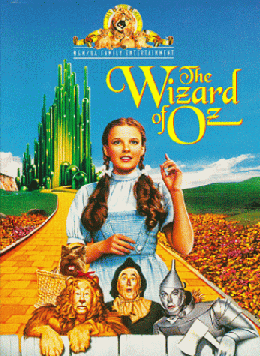
This apparent bastardization of Defoe's novel is especially annoying to me because I've read it several times. Along with The Wizard of Oz, Stand by for Mars (the first book in the "Tom Corbett, Space Cadet" series) and Robert Heinlein's Tunnel in the Sky, it was one of my childhood favorites. It probably was one of the subtle influences that led me to specialize in Indians and multiculturalism.

For more on the subject, see The Best Indian Books.

Below:  Friday the non-Native (Tongayi Chirisa on NBC's Crusoe).

Finding Native porn

Savage Love

Where Can I Find Native American Porn?Dear Dan: For some reason, I have always found Native Americans to be sexually attractive. But the whole semi-dark skin and traditional breechcloth thing doesn't seem to be easy to find in porn or real life. I was wondering if you had some pointers for someone with a bad case of Native American Jungle Fever. There seems to be a distinct lack of Natives going about in basic buckskin "dress" these days.
Native Amateur

"The letter writer is correct," says Sherman Alexie, the National Book Award–winning author who was willing to demean himself and risk career suicide by giving me a quote. "There is a dearth of Native American porn."

But Alexie tells me that once, while hunting for antique board games, he typed "cowboy and Indian action figures" into Google and found his way to a site that featured U.S. Cavalry soldiers and loinclothed Indians smoking more than peace pipes. But that's all he's got for us, pornwise. As for real life . . .

"There's just no way your reader is going to find an Indian willing to put on a loincloth for sexual purposes," says Alexie. "Unless that Indian is a seriously damaged, culturally disconnected, politically unaware, and unsafe-sex-practicing slut.
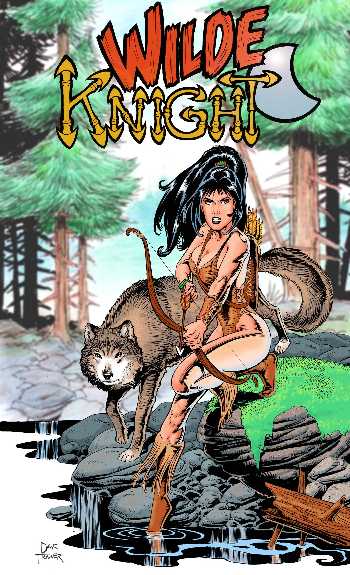
Comment:  You can find softcore porn in romance novels and comic books featuring sexy Native women and (sometimes) studly Native men. And don't forget the sexual titillation of publications like the Rez Dog calendar and Redskin magazine.

Below:  A comic-book character who exists only to show off her body.

Students play the stock market

The 'Tribal Exchange'

Taking a shot at the 'Stock Market Game'According to the National Congress of American Indians, children in 20,000 schools have taken part in a financial literacy program known as the "Stock Market Game." Teams of students are given hypothetical amounts of money to invest in the stock market. The winners of the game are those who "raise" the most money.

Many teachers support the SMG, stating students are excited to learn about financial matters because students are connected to real-life decisions.

But American Indian schools have not been part of this literacy program. Staff members at the NCAI have come up with a program that would offer the same benefits as the SMG.

The NCAI has created the Tribal Exchange to give American Indian schools another version of the SMG. But in this case, more than American Indian schools are taking part in the competition. Other Native agencies are jumping aboard for a bit of friendly competition.

The NCAI has worked in conjunction with government agencies such as the Bureau of Indian Education, the Office of Indian Education and Economic Development, Oweesta, First Nations, Native American Finance Officers Association and the Department of Treasury in the creation of this Tribal Exchange.

School and agency teams will each receive a hypothetical $100,000 to invest over the course of the game. The pilot game runs for 38 days from Sept. 2 to Oct. 10. School teams will consist of 9th graders and each school can have up to six teams of 3-5 members each. Agency teams will follow a similar format.

Media smearing Todd Palin?

Here's an example of a conservative nutjob inventing a smear campaign where none exists:

'Fairness' and the Smearing of Gov. PalinHer husband, the liberal media reported, back in the 1980s got a ticket for driving “under the influence.”

This seemingly trivial story is actually the opening wedge of a multi-pronged orchestrated left-wing attack designed to appeal to the racism that has always been at the heart of the Democratic Party.

Palin’s husband, you see, is part Native American. His ancestors include Inuits, i.e., Eskimos. But if this fact enters the news untinted by left-wing bias, it would show Gov. Palin to be inclusive, non-racist, and noble—qualities the media intends to prevent voters from seeing.

The liberal media is therefore falsely implying that Palin’s husband is alcoholic, and from there it will echo those left-wing blogs who paint him with the “drunken Indian” racist stereotype long promoted by Democrats.
Comment:  I've read a few dozen articles on Sarah Palin and her husband. Only a few have mentioned his DUI in passing. Not one has linked it to his Native ancestry or implied he's an alcoholic.

Nor has anyone said anything about Sarah Palin's attitude toward minorities. She may be a book-banner and a creationist, a hypocrite on earmarks and the Bridge to Nowhere, and a liar enmeshed in a scandal that may lead to charges, but no one has claimed she's a racist.

The only smear going on here is this right-wing attempt to smear the media. Republicans are upset because McCain picked a train-wreck of a candidate for VP. They're trying to salvage their campaign by blaming the messenger for the message.

Army and Apaches vs. Reagan

A Ludicrous Story--a wooden Cochise

Cavalry Charge (1951)--directed by Lewis R. Foster
starring: Ronald Reagan, Rhonda Fleming
Ironically, the first time a Native American is cast to portray Cochise in a movie, he is neither listed in the film's credits nor given an opportunity to act. On top of that, the whole premise is insulting to the point that perhaps he should have been relieved at being so far in the background: Imagine if you will that Mangas Coloradas and Cochise, along with some other Indian identified only as "Chee," have decided to let a White Man who now lives as an Indian and calls himself Chief Grey Cloud rule the Apache Nation and speak for them.

Of course that's not a complete synopsis of the movie's plot, which is not much less unlikely and involves a contingent of the Union Army trying to enlist the help of the Apaches in their drive to wipe out a small band of Confederate soldiers, led by a charming and irreverent Ronald Reagan. It's actually a Western comedy disguised as an action movie and in many ways is quite watchable, especially if you enjoy seeing a future U.S. President thumbing his nose at the American government (as a character in 1861, of course).

When we first see Cochise he is standing like a wooden cigar store Indian, facing a much more animated Mangas Coloradas (played by Iron Eyes Cody) inside a somewhat "correct" looking wickiup. Cochise is white haired and looks much older than he would have been in 1861. When we hear him speak at all, it is in an obviously fake "Indian-speak'" so typical of 1950s cowboys and Indian movies. One glaring error in the scene in which Cochise and the others appear is that they all pass around a peace pipe ... something the Apache tribe did not embrace.
Comment:  For more on the subject, see The Best Indian Movies.

Natives at the RNC, too

Convention Notebook:  Delegate celebrates 81st birthdayThe Red Lake Veterans of Foreign Wars color guard post kicked off Tuesday night’s convention session.

Working with a New Brighton, Minn., color guard, the four Red Lake men entered the hall dressed in full Native American regalia. Most noticeable was Jim Brown, Bemidji, carrying a staff with eagle feathers. Others carried flags.

John Barrett, who lives on the reservation, said: “It’s a great honor, really.”

There was no doubt the post would accept the invitation, even though Red Lake is heavily Democratic, Rocky Cook, Bemidji said. “It’s a no-brainer. It really is an honor to do this.”
Comment:  Compare this minimal presence with the huge Native presence at the DNC. That tells you all you need to know about which party respects Indians the most.

Golf pro at Pechanga course

Pavin to be touring pro for Journey at PechangaCorey Pavin has agreed to represent Journey at Pechanga as the new club's touring pro.

Journey at Pechanga is an upscale 18-hole public golf course located at the Pechanga Resort & Casino in Temecula. Pavin will act as a national spokesperson to create awareness for the course and he will participate in numerous events scheduled for Journey at Pechanga throughout the year.

September 02, 2008

Lots of possible Indians

Indian identity remains in questionMore than five centuries after Europeans made their first recorded contact with Native Americans, who they mistakenly termed Indians, the debate continues over who can claim to be Indian.

Is it the fullblood, whose ranks continue to decline, or the person with a large percentage of Indian blood?

Is it the person who meets a blood quantum, such as the requirement by the United Keetoowah Band of Cherokee Indians that its members be at least one-quarter blood?

Is it the person who, although having a slight degree of Indian blood, can prove descent from a person allotted land by the Dawes Commission and thereby has a card?

Or is it the person who, by whatever claim of family descent, claims Indian blood and perhaps a membership in one of dozens of “tribes” that have filed claims but have not been federally recognized?

And what can bona fide tribes, and their members, do about those with fraudulent claims?

A panel discussed all these cases during the concluding session of the State of Sequoyah Commission’s annual conference Friday at Northeastern State University. And during the discussion, one man who objected to its conclusions was ejected from the University Center.

“There are a number of issues that need to be addressed with different people in different states who come together and claim to be tribes,” said Dr. Richard Allen, policy analyst for the Cherokee Nation “We would like to make impersonation of a tribe, or a tribal citizen, a felony,” said Cara Cowan Watts, Cherokee tribal councilor.

“You can’t just create one. You can’t just make up an Indian tribe, culture or people. You can’t split off from another Indian tribe.”
And:As the students made their presentations, Murv Jacob, a longtime Tahlequah artist who portrays traditional Cherokee themes, went from table to table distributing copies of his letter to the editor published in Friday’s Daily Press. As he was doing so he exchanged words with Bread and Allen.

They and several other men escorted him from the hall outside the Herb Rozell Ballroom and down the steps of the University Center.

“I’m being dragged out of here!” Jacob exclaimed.
Comment:  For more on the last point, see Hillbilly "Indian" vs. 1/256th Cherokee. For more on the subject in general, see Indian Wannabes.

What "primitive" Indians really think

Here's a decent satire about Amazon Indians. It expresses how people think about them and how they (probably) think about us.

Lost tribe of Amazon and the Indian connectionHow is life in the jungle, cut off from all forms of civilization?

Life is pretty tough here. Sometimes you see our internet speeds drop below 2 MBPS and then it becomes tough to download those songs.

You have internet here?

Hey, what did you think we are in some primitive place or something? We often browse the web for all sorts of things--including knowing about our friends in different parts of the world. Some of them are in some place called parliament in your country.

You mean you have relatives there?

No silly, they were a bunch of jokers who were too primitive and uncivilized to be part of our cultured and learned tribe, so we banished them and they escaped to different parts of the world. I see so many of them on your television news channels.

That’s interesting. Do these guys stay in touch with you?

They dare not. We will never take them back and considering what they are doing to your country and the rest of the world, we don’t want them back.

How do you look at the rest of the world? Do you want to join the mainstream civilization, so to speak?

You guys are far more primitive than us. Just look at your infrastructure, the way you drive, the way you behave and treat your fellow human beings…such a way of life in unacceptable in our society. Out here every individual is respected and treated with love and care. We believe in fostering relationships and celebrating diversity and the welcome all forms of innovation and radical thinking with an open heart. We may be primitive in your world where technology is the sole judging criterion; but in terms of humanity, we are far advanced, we don’t need technology to stay in touch and we don’t have artificial relationships. For us everything is genuine and friendships are above everything else.
Comment:  Actually, there have been stories about Amazon tribes using Google Maps to protect their land from encroachment. So maybe this isn't a satire after all.

For more on the subject, see Indiana Jones and the Stereotypes of Doom.

The first Indian actors

American Indian ActorsCharles 'Charlie' Stevens
1893-1964

Chief John Big Tree
1875?-1967

Chief Many Treaties
1874-1948

Rodd Redwing
1904-1971

Jay Silverheels
1912 or 1919-1980

Chief Thunderbird
1866-1946

Gertrude Chorre
1885-1972

Sonny Chorre
1914-1987

Chief Thunder Cloud
1899-1955

Chief Yowlachie
1891-1966

Monte Blue
1890-1963

James Francis 'Jim' Thorpe
1888-1953

Bill 'Billy' Wilkerson
1902-1966

John War Eagle

Nipo Strongheart
1891-1966

Arthur 'Artie' Ortego
1890-1960
Comment:  Follow the link to see pictures of all these actors.

For more on the subject, see The Best Indian Movies.

Below:  Charles Stevens.

Palin appreciates Natives

Palin pick adds new Indian dimension to presidential racePalin, the first female Republican vice presidential candidate, is married to Todd Palin, who is of Yup'ik Eskimo descent. He works for an oil field and is a fisherman and champion snowmobiler. Their five children are also of Alaska Native heritage.

When Palin was running for governor in October 2006, she wrote a letter addressed to rural voters, saying she "so very much appreciates Alaska's First People, their proud heritage and diverse cultures so abundant in the communities throughout our state."

Alaska contains more than 225 of the 560-plus federally-recognized tribes in the U.S.

"I personally feel the language, stories, and traditions of Alaska Native cultures are a national treasure to be nourished and held close to our hearts," Palin added. "It is our rural lifestyle and diverse cultural heritage that distinguishes Alaska from the rest of the world and makes it our wonderful home."
Except the one she fired. Here's the flip side of her appreciation:Since the governor's initial campaign letter focused on Natives, Shepro said the governor has offered relatively little public comment on tribes. Some Indians and tribal advocates have been critical of her silence, especially given her Native family ties.

Also drawing criticism, Palin opposed an initiative to stop development of the Pebble Mine adjacent to the Bristol Bay fishing grounds, which is a prime area for both commercial and subsistence salmon fishing.

"Her public position on that issue undoubtedly had an effect on the defeat of that initiative, an initiative supported by many of the region's Inupiat and Yup'ik Alaska Natives," Shepro said.

Palin also concerned some Indians in July when she abruptly fired Walt Monegan, the first Alaska Native public safety commissioner in the state. The governor said she wanted to take the Department of Public Safety in a different direction, but a Republican rival said Monegan was fired because he refused to take action against state trooper Mike Wooten, who was recently divorced from Palin's younger sister.

All about Chief Yowlachie

Chief YowlachieA member of the Yakima tribe in Washington state, Chief Yowlachie (whose real name was Daniel Simmons) began his show-business career as, believe it or not, an opera singer, and spent many years in that profession. In the 1920s he switched to films, and over the next 25 or so years he played everything from rampaging Apache chiefs to comic-relief sidekicks. A large, round-faced man, his distinctive voice--a deep, resonant bass somewhat resembling Bluto's in the old "Popeye" cartoons--was instantly recognizable, and he had the distinction of not appearing to have aged much over his career, which is most likely attributable to the fact that he looked quite a bit younger than he actually was, so his "aging" wasn't all that noticeable. In addition to his "serious" roles, he had somewhat more light-hearted parts in several films, notably Red River (1948), where he traded quips with veteran scene-stealer Walter Brennan, and held his own quite well.Actor:  Chief YowlachieNative American actor Chief Yowlachie (pronounced "Yo-latchee") spent many years on stage as an opera singer, performing under his given name of Daniel Simmons. His film career began in the mid-1920s with feathered-headdress bits in such productions as Ella Cinders (1925). Though well into middle age when he started showing up on screen, he was youthful-looking enough to play fierce Indian warriors and renegades well into the 1930s. His larger roles include the nominal villain in Ken Maynard's Red Raiders (1928), Billy Jackrabbit in the 1930 version of Girl of the Golden West (1930) and Geronimo in Son of Geronimo. After years of portraying noble, taciturn characters with names like Running Deer, Yellow Feather, Long Arrow, Little Horse and Black Eagle, Chief Yowlachie let his hair down in the role of "Chief Hi-Octane" in the Bowery Boys' Bowery Buckaroos (1948). ~ Hal Erickson, All Movie GuideComment:  For more on the subject, see The Best Indian Movies.

Troopergate:  Native pressured Native

Fired Alaska Native cop not contacted by McCainWalt Monegan, the Alaska Native public safety commissioner who was abruptly fired by Gov. Sarah Palin (R), wasn't contacted by Sen. John McCain's presidential campaign before she was selected as his running mate.

Monegan said he was pressured by Palin's aides and members of her family--including her husband, Todd, who is also Native--to fire a state trooper who was married to the governor's younger sister. He refused to take action against the trooper and was abruptly fired in July.

Palin has denied any wrongdoing in the matter and the McCain campaign said it was aware of the state's investigation prior to selecting Palin. But Monegan, who has come forward with key documents, said no one contacted him to hear his side of the story.

The state Legislature appointed an investigator to determine whether Palin or her administration committed misconduct. A private attorney hired to represent Palin is already disputing whether lawmakers have the power to investigate.
Comment:  For more on the subject, see Palin Appreciates Natives.

Indian's-eye view of the DNC

Some pix taken by Victor Rocha at Invesco Field the night of Obama's acceptance speech. With celebrity sightings!

Obama Rally 08/28/08

Plus a video of the crowd just before Obama's speech:

Obama Rally

September 01, 2008

Giago on Trimble's victimhood

Tim Giago:  Moving from victimhood to victorsThirty years ago I wrote a book about the damage Indian boarding schools have done emotionally and spiritually to the Indian people. To one Native American writer this makes me a prisoner bound up in the chains of “victimhood.”

Charles “Wobbie” Trimble wrote that when we (Indians) speak, the white people interject, “Tell us about those awful days in boarding school; tell us how they beat you up.”

I wrote about the Indian mission boarding schools because by putting my pent-up feelings on paper I was able to face my anxieties and put that fear and yes, confusion, behind me. I did not write this book as a victim, but as a victor. I faced my fears and overcame them.

Shortly after my book came out I had a visit from a Catholic nun named Marie Therese Archambault, a member of the Standing Rock Sioux Tribe. She embraced me and said that when she read my book the catharsis was immediate. “I thought I was all alone out there with my closeted feelings of guilt and inadequacy,” she said. She thanked me for helping her to finally understand her anxieties and to assist her in creating new goals for her role in the Catholic Church. Sister Marie Therese passed away a short while ago, but she is just one outstanding example of the hundreds of letters and calls I received for writing a book that brought relief to many, many Indian people that had attended Indian boarding schools.
And:My book gave many Indians, in the Lower 48 and in Alaska, the courage and the determination to bring lawsuits against the Catholic Church and against individual priests for the terrible sexual abuse that raked across this nation in the past 10 years. Quotes were taken directly from my book and used in a court of law. Some of these cases ended in victory for the plaintiffs and some cases, including here in South Dakota, are ongoing.

My younger sister and several of her close friends went to their graves as victims of rape at the hands of a pedophile at a Catholic Indian mission boarding school. She died a drug addict and alcoholic as did several of her friends. Some of these abused women died not only as addicts but as prostitutes. Were they suffering from that malady Trimble calls “victimhood” or were they, indeed, victims?

One has only to read today’s article in the New York Times about the Gila River Reservation in Arizona and about how the theft of their water, water that contributed to their very survival, robbed them of that right and how they turned to government commodities rich in fat and calories that has turned their Nation into one of the largest, per capita, of people suffering from diabetes in America. Are they also suffering from the malady of victimhood or are they victims?

I agree with Mr. Trimble that we have to rethink our position of always being victims and to re-channel our thoughts to something that takes us past this belief. When I started a newspaper, The Lakota Times, a paper I later changed to Indian Country Today, a paper, incidentally that Trimble often writes for, I did it to prove that we (Indians) could build our own media, a media that would lead us away from “victimhood” and into the role of “victors.”
Comment:  Giago's column shows the problem with Trimble's thesis that Indians are acting like victims. As far as I can tell, they're both talking about the same thing. Giago refers to the Indians he's helped as victors, but I'll bet Trimble would call them people acting like victims.

Consider the examples Giago gives. For instance, boarding-school Indians with "closeted feelings of guilt and inadequacy." In other words, people who think and feel like victims. People who haven't followed Trimble's advice to "get over it." If the Jews who lived through the Holocaust can put that out of their minds, Trimble might say, why can't Indians forget about their past.

Indians filing lawsuits against the priests who abused them? Indians dwelling on the past as victims. Did the Jews sue the Nazis who imprisoned and killed them? No, they simply "got over it."

Indians who eat badly because the government stole their water? Indians who aren't taking responsibility for helping themselves. Indians acting like victims who can't do anything but perpetuate their victimhood.

You see what I mean? I don't agree with Trimble, but Giago hasn't begun to address Trimble's argument. In fact, Giago is basically arguing that Indians are victims in some cases and should act as such.

For more on Trimble's claims, see Trimble on Victimhood, Trimble to Indians:  Get Over It, and Looking for a Native Cosby? For more on the subject, see Blaming the Victim.

P.S. Giago framed the argument as choosing whether to be a victor or a victim. That reminds me of a posting I wrote on replacing The Star-Spangled Banner: Victor or Victim:  Our New National Anthem?

Fala in Wonderland

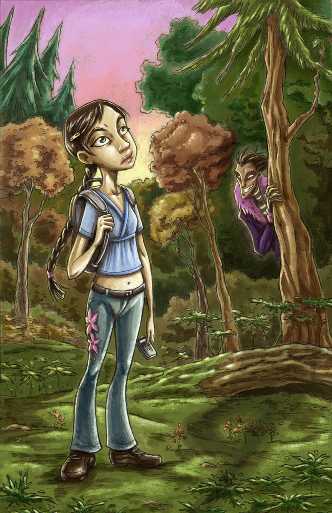
IPI:  Indigenous Peeps in the Industry--04In this deployment of IPI, we spotlight Beth Aileen Dillon, a Ph.D., Student at Simon Fraser University in the School of Interactive Arts and Technology and Research Assistant for the Aboriginal Territories in Cyberspace ("AbTeC"), "a series of projects investigating innovative methods for First Nations to participate in networked culture to tell our stories while populating and shaping cyberspace itself." Beth "is an Irish, Anishinaabe, and Metis writer specializing in video game industry" and her creativity has now spilled over into the comic industry.

Beth has recently ventured into the world of comic books with her work with the Zeros2Heroes people, "a thriving network that connects thousands of creators, producers, and fans of comics in a collaborative and creative environment."

MS: Tell us more about the comics you've been working on; how did it all start / come about?

BAD: Nis, a dear friend of mine, pointed me to the Zeros2Heroes and Aboriginal Peoples Television Network collaborative contest for Aboriginal Canadians to enter the contest. My husband and I went away to working on some concepts and responded to feedback from the community which gave us the opportunity to see these ideas come to life.

Fala, a Native urban fantasy rendition of Alice in Wonderland, is inspired by our friends from a short film script I was writing with them in mind before we heard about the contest. With the help of editor Julian Lawrence and artist Patricio Plaza, we get to see Cowboy Smithx as Trickster, Duane Howard as Badger, Senaqwila Wyss as Fala, and Justin Rain and Shane Zwack as Ace and Spade in comic book form.

Fala's one of those girls who plays video games, but she's still cool, and of course, often too cool to bother to finish her homework or help out her single mom. Sent out to the woods for a homework assignment on edible plants, Fala gets lost (or rather tricked) and finds herself led down a path of life lessons in a dark, strange rez town.

MS: What are some comics with Native American characters in them that stand out to you?

BAD: Although controversial, I have to admit that Myron and I enjoy Scalped. Sure, it's not made by indigenous people, but I feel the people involved are making a shot at proper representation. That, and, where else can you find a comic entirely about modern Natives put out by a big publisher?

MS: What is your opinion about Indigenous characters in comics? Do you feel we portrayed properly?

BAD: Rarely. I won't even open The Red Prophet to give it a try because all I see on the cover is a stereotypically aged Native man with a little white boy named Alvin and think--yeah, another outlet where the focus is on the non-Native character. Of course I could be completely wrong about the series, but I do judge books by their covers. Much like video games, we're often shaped into stereotypes. Halfbreed heroes who slay Indians until they too discover their Indian roots and all is forgiven, the busty hot Native chick who means business in tight skinned leather, you name it. As more of us grow up playing games and reading comics, the more we'll get involved in making our own representations, and I'm looking forward to it.

MS: Do you know of any other Natives in the "biz" (comic industry and/or video game industry)?

BAD: Steve Sanderson is a great artist who has merged the Japanese manga style with his own to tell unique indigenous stories through comic books. His work has been put out by the Healthy Aboriginal Network.

And of course Chad Solomon, co-creator of the Rabbit and Bear Paws.
Comment:  Despite the idea of a white boy dominating an Indian man (shades of Indian in the Cupboard), the first few issues of RED PROPHET were good. The quality was in the same ballpark as SCALPED's but the stories were much less stereotypical.

For more on the subject, see Comic Books Featuring Indians.

Our black and Indian presidents

Barack Obama--America's 6th Black President?Joel A. Rogers and Dr. Auset Bakhufu have both written books documenting that at least five former presidents of the United States had Black people among their ancestors. If one considers the fact that European men far outnumbered European women during the founding of this country, and that the rape and impregnation of an African female slave was not considered a crime, it is even more surprising that these two authors could not document Black ancestors among an ever larger number of former presidents.

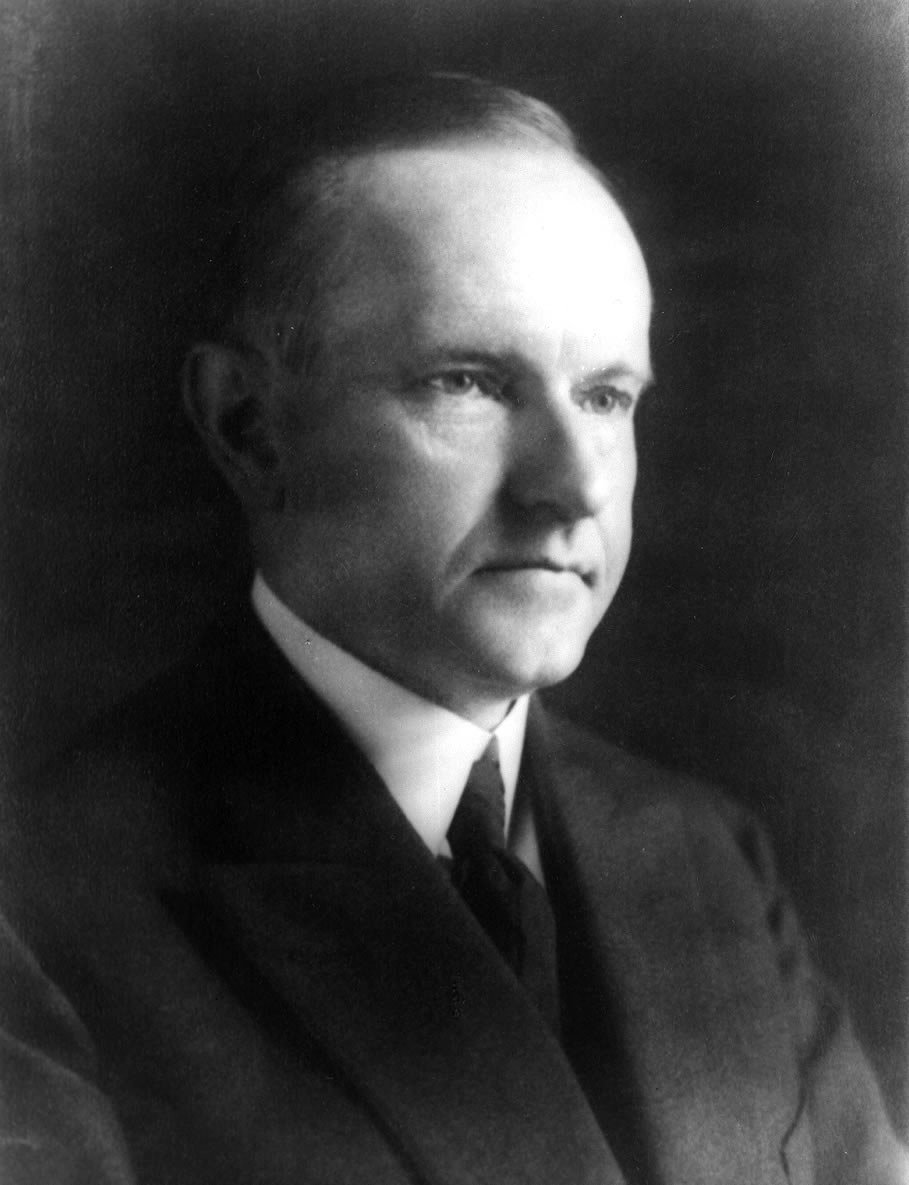
The president's names include Thomas Jefferson, Andrew Jackson, Abraham Lincoln, Warren Harding, and Calvin Coolidge.

The best case for Black ancestry is against Warren G. Harding, our 29th president from 1921 until 1923. Harding himself never denied his ancestry. When Republican leaders called on Harding to deny the "Negro" history, he said, "How should I know whether or not one of my ancestors might have jumped the fence." William Chancellor, a White professor of economics and politics at Wooster College in Ohio, wrote a book on the Harding family genealogy and identified Black ancestors among both parents of President Harding.

Andrew Jackson was our 7th president from 1829 to 1837. The Virginia Magazine of History Volume 29 says that Jackson was the son of a White woman from Ireland who had intermarried with a Negro. The magazine also said that his eldest brother had been sold as a slave in Carolina. Joel Rogers says that Andrew Jackson Sr. died long before President Andrew Jackson Jr. was born. He says the president's mother then went to live on the Crawford farm where there were Negro slaves and that one of these men was Andrew Jr's father.

Thomas Jefferson was our 3rd president from 1801 to 1809. The chief attack on Jefferson was in a book written by Thomas Hazard in 1867 called "The Johnny Cake Papers." Hazard interviewed Paris Gardiner, who said he was present during the 1796 presidential campaign, when one speaker states that Thomas Jefferson was "a mean-spirited son of a half-breed Indian squaw and a Virginia mulatto father." In his book entitled "The Slave Children of Thomas Jefferson," Samuel Sloan wrote that Jefferson destroyed all of the papers, portraits, and personal effects of his mother, Jane Randolph Jefferson, when she died on March 31, 1776.

Abraham Lincoln was our 16th president from 1861 to 1865. J. A. Rogers quotes Lincoln's mother, Nancy Hanks, as saying that Abraham Lincoln was the illegitimate son of an African man. William Herndon, Lincoln's law partner, said that Lincoln had very dark skin and coarse hair and that his mother was from an Ethiopian tribe. In Herndon's book entitled "The Hidden Lincoln" he says that Thomas Lincoln could not have been Abraham Lincoln's father because he was sterile from childhood mumps and was later castrated. Lincoln's presidential opponents made cartoon drawings depicting him as a Negro and nicknamed him "Abraham Africanus the First."

Calvin Coolidge was our 30th president, and he succeeded Warren Harding. He proudly admitted that his mother was dark because of mixed Indian ancestry. However, Dr. Bakhufu says that by 1800 the New England Indian was hardly any longer pure Indian, because they had mixed so often with Blacks. Calvin Coolidge's mother's maiden name was "Moor." In Europe the name "Moor" was given to all Black people just as the name Negro was used in America.
Comment:  For more on the subject, see Fun 4th of July Facts.

Schools with Native designs

Tribal schools expand role preserving native cultures

New designs focus on symbolism, tribal rituals and eco-friendly features A new K-12 school now under construction near Auburn by the Muckleshoot Indian Tribe will be rich in symbolism, referencing the geography of the tribe’s land between two rivers as well as the path that children take toward adulthood. The school will also pay tribute to the four seasons.

The design of each building in the four-building complex will support tribal identity and traditions. And each building will represent a step in the development of a child, a deliberate hierarchy that brings children into contact with older children and ultimately adults. An exterior fire pit and story circle as well as a freestanding fireplace in the library will support the tribe’s oral tradition.
Another example:The Chief Leschi School of the Puyallup Tribe likewise makes extensive use of wood.

A sacred circle at the center of the campus acknowledges an orientation of the four directions and a belief that life is a journey from east to west, infancy to old age, as the sun crosses the sky. The building forms that radiate from the circle incorporate universal elements of the sea, the valley and mountain into a unified whole.
And:More than most non-natives, tribal communities value their geographical place because it is inevitably linked with their culture. The spirituality of the place informs the communities’ beliefs and rituals.

Wisconsin’s Indian Community School meanders ribbon-like for a quarter of a mile on a 124-acre site that includes wetlands, hills, prairies and woodlands.

At one end of the building, an amphitheater around a tree symbolizes the tradition of oral history for the Oneida, Menomonee and Stockbridge-Munsee Indian tribes. Metal beams in the ceiling near the main doorway represent the migratory paths of birds and a breakout classroom overlooks wetlands.
Comment:  Compare the Native approach to schools with the Western approach described in Deconstructing the Classroom. Notice any difference?

Needless to say, all this effort to incorporate traditional values into Native schools is happening because of Indian gaming.

Q'orianka's Hawaiian epic

Princess Kaiulani’s World Premier at Hawaii International Film Festival in OctoberPrincess Kaiulani is the official title of the film about Hawaii’s Princess Kaiulani which had become a lightning rod of controversy with its tentative titles of The Barbarian Princess and then The Last Princess. The title was finalized soon after the movie wrapped this summer. The poster can be seen at www.matadorpictures.com.

The $9-million film written and directed by Marc Forby appropriately will have its world premier at the Hawaii International Film Festival in October.

Here’s Matador Pictures synopsis of the story:

“1888, the Kingdom of Hawaii is divided by a bitter civil war. Princess Ka’iulani, the young heir to the throne, is suddenly forced to flee the home she adores and move to England where she finds an altogether different life--one where she is not considered royalty. As she grows up and adapts to her new life there, she falls in love with the rebellious but sweet-natured Clive. At the tender age of 17 she receives the devastating news that the Monarchy has been overthrown and her aunt, the Queen, arrested. The young Princess must choose between her true love and the responsibility that comes with her title. Learning what it truly means to be a nation’s Princess, Ka’iulani makes it her mission to restore her kingdom and travels to America to win the hearts and minds of the people.”
Comment:  Interesting to ponder the connection between the stereotypical title The Barbarian Princess and the choice of the non-Hawaiian Kilcher to play the title role. As you may recall, we discussed the casting issue with Marc Forby in Pocahontas the Hawaiian Princess.

For more on the subject, see The Best Indian Movies.

Coel's new thriller

Review:  Margaret Coel takes a new direction with latest thrillerAuthors of popular series sometimes find themselves locked into the worlds and characters they've created, simply because that's what readers, and therefore publishers, want.

Nothing wrong with that, especially when a series is as consistently excellent as Boulder writer Margaret Coel's "Wind River Reservation Mystery" novels featuring the intrepid Father John O'Malley and Arapaho Indian attorney Vicky Holden.

But after 13 consecutive novels in that series, Coel has earned the right to stretch her wings a little. Her new novel, "Blood Memory"--due in stores Tuesday--doesn't stray too far from her Wind River formula--there is an Indian issue at stake, and the tough-yet-vulnerable protagonist Catherine McLeod, a Denver investigative journalist, bears a passing resemblance to Holden--but it's a suspenseful, page-turning change of pace.
Comment:  For more on the subject, see The Best Indian Books.

Films from the dark side

Indian Comics Irregular #174:  Frozen River and The Exiles