December 23, 2010

UN declaration = status quo

No real change in US position on Declaration

By Steven NewcombSpecifically, Article 1 of those two human rights Covenants reads: “All peoples have the right of self-determination. By virtue of that right, they freely determine their political status, and freely pursue their economic, social and cultural development.” Article 3 of the Declaration reads: “All Indigenous peoples have the right to self-determination. By virtue of that right they freely determine their political status and freely pursue their economic, social and cultural development.” They are in perfect alignment.

However, in 2007, the United States claimed that the collective rights expressed in the Declaration (e.g., Article 3) are not the same as Article 1 rights expressed in the Human Rights Covenants in international law. The U.S. also claimed that the U.N. Working Group had been given a “mandate,” specifically, “to articulate a new concept, i.e., self-government within the nation-state.” Yet, the U.S. government provided no document to support this claim, nor could it because the Working Group was never given such a mandate.
And:The U.S. position seems well designed to maintain the status quo of federal Indian law and policy. The United States seems determined to maintain the bedrock categories and concepts found within the symbolic universe of U.S. law and policy constructed by the United States for the reduction, control and containment of originally free and independent Indian nations.

“Christian discovery,” “conquest,” and the idea of “diminished” Indian sovereignty are some of the foundational categories of the status quo, being actively used by the U.S. court to the detriment of Indian nations. The Declaration does not do away with a dominating framework that is in violation of our inherent sacred birth rights and our fundamental human rights as indigenous nations and peoples.
Tribal recognition

By Marc DadiganWhile Obama endorsed the document (the U.S. is one of the last U.N. member states to do so), he also endorsed the government’s right to apply it only to federally recognized tribes.

“For the United States, the Declaration’s concept of self-determination is consistent with the United States’ existing recognition of, and relationship with, federally recognized tribes . . .” the paper says.

The problem here is that the system of federal tribal acknowledgment is incredibly inefficient and plagued with corruption, politics and an utter lack of transparency. I doubt there are any experts on this issue who would agree the federal recognition process would jive with the U.N.'s idea of self-determination.

So to paraphrase, the Obama administration says the U.S. government will respect the rights of this country’s indigenous people, but the government maintains the ability to decide who’s indigenous.

And it’s been well documented that the government is very bad at making these decisions.
Obama's so-called endorsement

Another of my discussions of the UN declaration:

Help me out, legal scholars. Obama says the US will "lend its support" to the UN Declaration on the Rights of Indigenous Peoples. What makes this anything other than his personal, temporary, and reversible position? What happens if the next president says the US doesn't support the UN declaration?Nothing, legally speaking. The disapproval of the international community is the only consequence.That's why I want more: another UN vote, an executive order, a signing ceremony, or something. Something other than Obama's arbitrary wish or hope that the US will follow the declaration.

Obama's personal feelings about "aspiring" to the declaration don't mean anything to me. They don't have the force of law or even the illusion of it. In the long term, they're irrelevant.

Given the right-wing cheering of Bush's preemptive war and violation of the Geneva Conventions, who thinks a conservative president will ever bow to world opinion on indigenous rights? Not me.Even if we "signed" it, the consequences would be no different.Probably so, but I'd like to make it as official and irrevocable as possible. It seems strange to beg the US to sign it and then be satisfied when Obama merely "lends his support."I think it will be up to the tribes to make that happen. They should invoke it frequently; do annual reviews of compliance; analyze existing US laws for conformity to Declaration, etc. If we take it seriously, others will, too. May take a while, though.For more on the subject, see Obama Will Give US to Indians?! and US May Acknowledge Indians' Existence.

December 22, 2010

Obama will give US to Indians?!

Conservative group:  Obama will give ‘entire land mass’ of the US to ‘the Indians’

By Eric W. DolanStop us if you've heard this one: President Barack Obama wants to return the entire land mass of the United States of America to Native American tribes.

No, nevermind. That one's new.

The wild claim comes by way of the American Family Association (AFA), a conservative non-profit focused on anti-gay initiatives.

They were reacting to a Thursday announcement by President Obama, that the US would sign a non-binding United Nations declaration on the rights of indigenous peoples, which has been endorsed by 145 countries.

The declaration states that "indigenous peoples have the right to the lands, territories and resources which they have traditionally owned, occupied or otherwise used or acquired," and nations "shall give legal recognition and protection to these lands, territories and resources."

This means President Obama "wants Indian tribes to be our new overlords," according to Bryan Fischer, AFA's "director of issue analysis."
To give you an idea how stupid these people are, here's their position on gays in the military:Last week, Fischer lamented the repeal of "Don't Ask, Don't Tell," blaming "turncoat Republican senators" for the destruction of "sane moral and sexual standards governing military personnel policy."

"We will no longer be able to bail out these other emasculated armies because ours will now be feminized and neutered beyond repair, and there is no one left to bail us out," he said. "We have been permanently weakened as a military and as a nation by these misguided and treasonous Republican senators, and the world is now a more dangerous place for us all."
Comment:  I expected to hear more complaints along these lines from Limbaugh, Beck, Palin, et al. But Obama effectively buried the story. He announced the US would "lend its support" to the UN declaration, not endorse or sign it. In the middle of a speech, not in a standalone announcement. At the second tribal summit, not at the first one.

It goes without saying that Fischer's position is asinine and idiotic. Does he seriously think Congress or the courts are going to take a United Nations declaration seriously? One that the US voted against? I'm not sure Obama's statement of "support" has any legal validity. What happens if a future president says he or she doesn't support the UN declaration?

Congress and the courts have ignored the constitutional clause that says Indian tribes are equivalent to foreign nations--i.e., sovereign entities. They've ignored hundreds of treaties and the constitutional clause that says treaties are the supreme law of the land. After 200 years of ignoring the Constitution and several hundred treaties, Fischer thinks a badly divided government will follow a non-binding UN declaration to the letter? You can't get much stupider than that.

Conservatives = liars

A few points worth noting:

1) Conservatives continue their policy of lying outrageously about anything Obama says or does. From Obama's birth certificate to his healthcare plans, conservatives have told most of biggest lies of 2009 and 2010.

They've admitted that their no. 1 goal isn't to help Americans or to govern the country effectively. It's to make Obama a one-term president. Hence the constant lies about Indians, Muslims, and illegal immigrants as well as global warming, terrorism, and the economy. Anything that helps them win the next election--no matter how false or hypocritical it is.

2) We see once again that all bigotries are similar and interrelated. Fischer seems about equally prejudiced against Indians and gays. Both his fears take the same form: "they" (Indians, gays, foreigners) are threatening our white privilege and power. "They" are coming to take us over.

I'd be amazed if a single conservative ever said, "I hate [blacks, Latinos, Indians, Muslims, or gays] but I love every other minority." These people hate everyone who isn't a white Christian heterosexual like them. They hate precisely because some people are different from "the norm."

For more on the subject, see Conservatives Think They're "Natives," What "I Want My Country Back" Means, and Culture War Over Who's American.

Blackfeet teacher wins Milken award

Sheila Hall
Teacher
2010
Biographical Information:

At Vina Chattin Elementary in Browning, MT, Sheila Hall instills a sense of pride, purpose and professionalism in everything she does. Hall is a well-respected role model at her Native American reservation school, and always steps up to the plate, no matter what challenge may be headed her way. In her third-grade classroom she helps students reach their highest expectations and attain academic success. Hall herself is a testament to the power of education to build opportunity and enhance lives.

Hall analyzes the students’ individual aptitudes and tailors her instruction to meet the needs of each one. Skilled at building student relationships, she keeps parents in the loop while holding students accountable for their actions. Her cross-curricular style has included insightful lesson plans like “Targeted Treasure Hunts” and exposure to multi-chapter books, including the Harry Potter series. Hall also maintains rigorous communication with caregivers, following through with parents whose children are truant.
Sheila Hall:  Growing Up Blackfeet

By Benj GilmanDo you incorporate that rich history of the people and the land into your curriculum? In other words, how do you instill a sense of culture and identity while advancing a student's overall education?

It's very important to instill a sense of culture and identity in my classroom. Students will feel they belong and their self-esteem will develop when they feel connected or can see their culture in the classroom. In reading block, Native American picture books are used to discuss and answer questions about the text. Students also learn to speak and use Blackfeet words for English words. In science, I teach a unit on diabetes with the goal of encouraging students to live in balance. In social studies, the students learn about the seven reservations of Montana. They identify and locate the reservations and the names of tribes on each reservation. Also in social studies, students learn about Blackfeet history, such as the importance of the buffalo, the Blackfeet lodge, the Dog Days and proper etiquette of being respectful.
Comment:  For more Native awards, see First Drum Awards Announced and KCET and San Manuel Announce Awards.

Arctic Scents

Anaktuvuk Pass artist starts village perfumery

By Victoria BarberRainey Nasugraq Hopson is an Inupiaq writer and artist in Anaktuvuk Pass who writes a popular blog called Stop and Smell the Lichen. And now her followers--whether from Alaska, Ohio or beyond--can do just that.

Hopson, who has offered her artwork online for several years, has launched a line of fragrances, "Arctic Scents." So far there are eight; the lineup includes Lichen, Ursus Arctos (brown bear), Avu, Corvus Corax (raven), Willow, Canus Lupus Arctos (arctic wolf), Frost and Wild Alaskan Rose.
Comment:  For more on the subject, see Native Women Are Entrepreneurs and Alaska Natives = Business Successes.

December 21, 2010

Conservatives think they're "natives"

White European conservatives are doing the same thing as white American conservatives: claiming they're native to the land and labeling the indigenous people immigrants or colonists.

There is no such thing as an 'indigenous' Briton

It is deeply offensive for far-right lobbyists to hijack the term to support their anti-immigration agenda

By James Mackay and David Stirrup
The commenters concerned are–surely unwittingly–aligning themselves with the nationalist myth-making of the far right. Nick Griffin used his Question Time appearance to declare: "The indigenous people of this island are the English, the Scots, the Welsh and the Irish … We are the aborigines here," and both his party, the BNP, and the English Defence League regularly invoke the UN declaration on the rights of indigenous peoples.

They're not the only one. Other European anti-immigrant parties have sought to align their quest to restrict immigration with the politics of indigeneity. A poster by the Italian political party Lega Nord, for example, portrays a stereotypical 19th-century Plains Indian warrior accompanied with the slogan: "They were subjected to immigration–now they live on reservations!" In the first half of the 20th century, the image of the indigene was adopted by the European far right as an exemplar of nobility, strength and resistance. At the beginning of the 21st century, the far right seeks to adopt a curious narrative of victimhood.

The argument has a certain superficial logic: if people accrue additional rights by virtue of being indigenous, then surely the indigenous British should also have these additional rights, over and above "non-indigenous" inhabitants. If indigenous peoples have the internationally recognised right to seek legislation to resist cultural dilution, surely indigenous British (or Europeans) can do the same with regard to "unwanted" immigration. If simply being first is what matters, surely this has to apply in every instance.

The problem here is with defining the term "indigenous." The dictionary definitions are of little help. After all, most people were born in the country in which they live and thus surely "originate" there; on the other hand, go back far enough in history and no group outside Olduvai, in eastern Africa, can lay claim to being truly "native."
Comment:  This conservative mindset is patently obvious: "We're just as legitimate as the people who came before us. And we're more legitimate than the people who came after us. Therefore, we have the authority to make the rules and no one has the authority to question us."

But it doesn't seem that hard to define "indigenous" in a way that excludes recent Caucasian invaders and conquerors. How about "produced, growing, living, or occurring naturally in a particular region or environment since before recorded history"? In other words, if a historic record exists of a group's arrival, we don't classify them as indigenous to the place. If someone observed and recorded their arrival, they arrived by definition.

Conservatives mad about Thor

Here's how silly these protests can get:

Council of Conservative Citizens Calls for Boycott of Thor Over Black Actor

By David TaintorThe Council of Conservative Citizens has launched a website calling for a boycott of the new Marvel comic-inspired film Thor, because a character is being played by a black actor.

The CCC is the contemporary incarnation of the segregationist Citizens Councils, which sprung up across the South in the wake of Brown v. Board of Education and which possible Republican presidential candidate Haley Barbour praised in a recent interview.

"It seems that Marvel Studios believes that white people should have nothing that is unique to themselves," a post on the CCC's website reads. "An upcoming movie, based on the comic book Thor, will give Norse mythology an insulting multi-cultural make-over. One of the Gods will be played by Hip Hop DJ Idris Elba."
So let me see if I have this straight. The KKK CCC has no opinion about the racial disparities in America's income, healthcare, and education levels. It isn't shocked that whites have so much more wealth and status than blacks, Latinos, or Indians.

Nor is CCC focused on injustices in the entertainment industry. It has nothing to say about whites being cast as Indians, Asians, and other minorities.

No, the sole issue that outrages the CCC is casting a black actor as a Norse god. And that has nothing to do with the CCC's desire to maintain the Aryan purity of the white race.

Uh-huh, sure it doesn't.

Thanks for showing us your true colors, conservatives. Your singleminded focus on maintaining every example of white power and privilege, down to the casting of an inconsequential superhero movie, proves how racist you are.

Black Heimdall okay?

I personally think Hollywood should go with race-specific casting whenever possible. Especially if its a first or major or breakthrough role. So no black George Washington, John F. Kennedy, or Spider-Man and no white Tonto, Jacob Black, or Aang the Airbender.

But I don't think it's a major problem to do the millionth production of Hamlet with a minority cast. Or to make a minor character like Daredevil's Kingpin or Thor's Heimdall a minority. Since white people are overrepresented in most forms of media, changes to increase diversity are often welcome. For instance, making Starbuck a woman in the new Battlestar Galactica.

Let's note a few important points. These are fictional, comic-book versions of the Norse gods. They probably have the ability to change their form and color. The comics generally portray Heimdall in a brown fur outfit. Therefore, it doesn't seem much of a stretch to give him brown skin also.

For more on the conservative mindset, see What "I Want My Country Back" Means and Culture War Over Who's American. For more on casting issues, see Lack of Diversity = Discrimination and Casting Non-Natives as Natives.

Below:  Heimdall the black Norse god.

America the Monopoly game

If America were a game of Monopoly

By Abagond3. Starting amounts: Before play begins give each player the following amounts to start with:

* $1500 white
* $1085 yellow
* $105 black
* $75 red

(Based on median household net worth in 2000.)

4. When passing Go: Each player will get the following amounts when passing Go:

* $200 white
* $170 yellow
* $140 black
* $120 red

(Based on median personal income for 2000.)
And:7. Voting: To win a vote a motion must get at least 5.1 votes. Each player gets the following number of votes:

* 8.2 white
* 1.3 black
* 0.4 yellow
* 0.1 red

(Based on those reporting one race on the 2000 census.)

8. Speaking: The white player can speak at any time. Other players speak only when spoken to. They are allowed to raise their hand to try to get the attention of the white player to ask a question.

(Based on media ownership.)
And:Advice to white players:

If the other players complain that the rules are unfair, say “Get over it!” Point out that the game is fair and democratic: they can always ask for a rule change and put it to a vote. Also point out that the white player does not always win, so if they lose it is their own fault.
Comment:  See the original posting for the complete set of rules.

For more on the subject, see Robin Hood the Socialist, Americans Refuse to Acknowledge Prejudice, and Non-Indians Complain about "Inequalities."

Christian Crees tear down sweat lodge

Banning spirituality

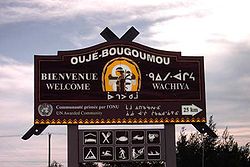
Oujé-Bougoumou tears down a local sweat lodge to satisfy the community’s Christians

By Amy German
Oujé-Bougoumou’s Redfern Mianscum just days ago witnessed his community tear down a sweat lodge he built with his bare hands earlier this fall. The community did so under a new bylaw that was passed in late October banning all traditional spiritual practices within reserve limits after a petition was passed requesting it.

Mianscum said he had built the sweat lodge in the backyard of his friend, Lana Wapachee, on October 5 because he felt there was a need for a source for traditional healing within Oujé.
This action was based on a tribal resolution:The resolution reads that the Council of the Cree Nation of Oujé-Bougoumou:

– hereby declares that the sweat lodge along with any form of Native Spirituality Practices such as Powwows, Rain Dances et etcetera do not conform with the traditional practices and teachings of our Elders.

The resolution also stated that the community was founded under the Christian faith and values of the community’s Elders and past leadership and that the community will continue to uphold its faith in guidance with God.
More on the tribe:

Oujé-BougoumouThe Cree in the Chibougamau area had been marginalized in the 20th century by many forced relocations. After decades of relocations, this band gained recognition by the government and was given land to construct a new permanent village. It was designed by architect Douglas Cardinal (famous for the Canadian Museum of Civilization in Gatineau, Quebec) and was built in 1992. It has won recognition and awards for its modern concepts combining economic sustainability, environmental conservation, and design.Comment:  The tribe seems progressive enough, but its policy of banning traditional practices in favor of Christianity is shortsighted. Christianity has hurt more Indians than it's helped, which is why many Indians reject it.

For more on the subject, see Catholics to Ban Indian Practices? and Landover Satirizes "Injun Sin."

Cherokee breaks car-pushing record

Cherokee Nation citizen breaks car-pushing world record

By Jami CusterCherokee Nation citizen Baron O’Field earned his spot in the Guinness Book of World Records by pushing a car 27 miles in 20 hours, beating the old record of 26.2 miles in 24 hours.

O’Field passed the previous record at 9:03 a.m. on Dec. 17 in the Walmart parking lot. He began his attempt by pushing a four-door Ford car donated by Stuteville Ford at 1 p.m. the previous day.
And:O’ Field said he had a couple reasons for attempting the feat, one of them being the world record. He said he works with CN citizen Brian Jackson, who holds several world records for blowing up and popping inflatable objects.

“(Jackson) is only one of six Native Americans that has one (record), and I will try to be No. 7, I guess,” O’Field said. “Second, I want to try to raise money for the Angel Tree Program. There is still about 300 kids that haven’t received anything for the Angel Tree, so I’m trying to help them out.”
Comment:  Would it be fair to call O'Field an unsung hero or warrior akin to other tribal champions? Hmm, probably not.

For more on the subject, see Cherokee World-Record Holder.

Below:  "Cherokee Nation citizen Baron O’ Field pushes a car Dec. 16 at the Walmart parking lot in Tahlequah, Okla., in an attempt to break the world record of 26.2 miles in 24 hours. He broke the record Dec. 17 with 27 miles in 20 hours." (Jami Custer/Cherokee Phoenix)

December 20, 2010

The Savage in Bonanza

Unlike the other episodes of Bonanza I've reviewed, The Savage (airdate: 12/3/60) is plainly stupid. For a detailed synopsis, see Pictorial Synopsis: The Savage. Most of the online summaries are partially incorrect, including this one, so I'll tell you what happens and why it's wrong.

[**spoiler alert**]

Beginning

Two white trappers enter a Shoshone burial ground because it contains the best fur-trapping west of the Mississippi. Which is ridiculous because they're in an arid mountain area devoid of running water. It doesn't matter because two Indians kill them for their effrontery.

The two Indians are part of a party led by Chato. The credits call Chato "Chief" but he's a shaman, which is still incorrect. "Medicine man" probably would be the correct term.

Chato sends his two sons into the Mountain of the Dead, the Shoshone burial ground, to contact White Buffalo Woman. They need her help to cure the illness devastating their tribe. Chato doesn't expect his sons to come back alive, but they're desperate for her help.

Meanwhile, Adam Cartwright is passing by on his way to see a windmill. He sees the dead trappers, then hears an Indian calling for White Buffalo Woman. He watches as a blond woman in Western dress appears.

The Indian implores her to help his tribe, but she refuses. He grabs her arm and realizes she's a flesh-and-blood woman, not a spirit. He threatens her. Adam intervenes and kills the two Indians, but not before one of them wounds him with an arrow in the leg.
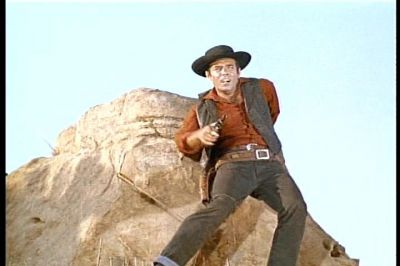


I don't know anything about Shoshone burial practices, but I doubt the Mountain of Dead thing is real. Anyway, that's not a big deal. The real problem is the so-called White Buffalo Woman.

1) The Shoshone Indians have been in contact with white people for decades--at least since the Lewis and Clark expedition. But they think a white woman is a supernatural being? Why, because she lives on the Mountain of the Dead without being struck by lightning? Or what, exactly?

She doesn't appear out of nowhere, float in mid-air, or conjure things. In fact, she looks exactly like a standard pioneer woman. Why wouldn't the Indians consider the possibility that she's mortal? Because they're primitive and superstitious and can't think rationally, I presume.

2) Why do they call her White Buffalo Woman? Because she's a white woman, which is similar to a white buffalo woman? The supernatural being is a "White Buffalo" Woman, not a White "Buffalo Woman." It's idiocy to equate one with the other.

3) As Adam correctly notes, White Buffalo Woman is a "spirit woman of the Plains Indians." So what the heck are the Shoshone Indians of the Lake Tahoe area doing worshiping her? After Adam points out this glaring flaw, the episode ignores it. Did Bonanza's writers think western Nevada was part of the Great Plains?

Middle

The woman, whose name is Ruth Halverson, nurses Adam back to health. He takes to wearing a headband for no discernible reason. Perhaps it's to show he's living primitively, getting closer to nature, like an Indian.
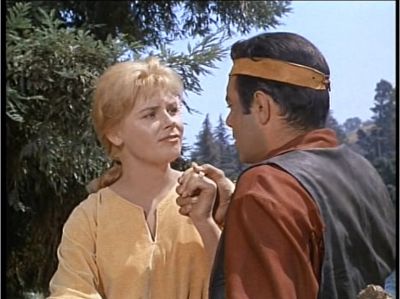


Mr. and Ms. Savage, above.

Ruth tells Adam her story. She was a girl in a Norwegian immigrant family that headed west from Missouri. Her father disappeared and Bannock Indians captured and raised her. White hunters killed the Bannocks, leaving her to live alone. She preferred the solitary life because she had no one left.

Is Ruth supposed to be the savage of the title, or is Adam? Either way, the generic title doesn't fit the episode. It's even less fitting than The Last Hunt.

Adam and Ruth fall in love for no discernible reason--perhaps because they're the only two white persons for miles around. Adam proposes to Ruth, which means the relationship is doomed. She'll be lucky if she gets out of the episode alive.

End

Two Indians enter the Shoshone village of tipis (wrong). They go to the "shaman" (wrong) to tell him his sons are missing. Wearing a buffalo helmet (wrong), the shaman says he'll have to do the job himself.

The Indians find Chato's sons dead and attribute their demise to White Buffalo Woman's powers. Apparently they're not able to distinguish between bullet wounds and magic. They go to her camp and demand her help. Knowing she isn't a supernatural being, she again refuses.

Since she's turned down every Indian plea, it's not clear why they think she has healing powers. Because she's a white woman who lives in a sacred burial ground? Why not ask other Indians or white men for help? Other episodes have established that the Indians deal with white men occasionally.

The Indians depart but return to capture Adam when he's alone. They'll threaten to kill him unless she cooperates. Suddenly they're not too worried about her alleged ability to strike people dead. Maybe she'll miss them when she fires her invisible thunderbolts.
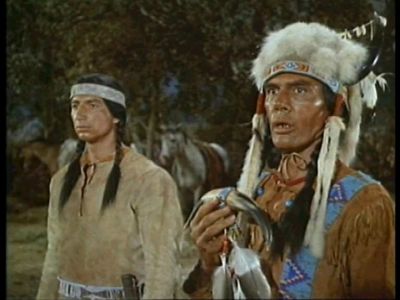


Chato the Plains-style Shoshone shaman, above.

Ruth appears and ignores Adam's warnings. When an Indian prepares to kill him, she agrees to go with and help them. Adam is left distraught and alone when the other Cartwrights find him. Ruth has survived but Adam probably won't see her again.

Conclusion

As usual, the Indians are played by non-Indians in wigs and headbands, but that's the least of The Savage's problems. First is equating the Shoshone tribe and religion with a Plains tribe and religion. Second is the Shoshones' inability to distinguish a white woman from an Indian spirit. Third is their reliance on an uncooperative stranger for their medicinal needs. Three strikes and The Savage is out.

For more Bonanza reviews, see The Paiute War in Bonanza and Day of Reckoning in Bonanza.
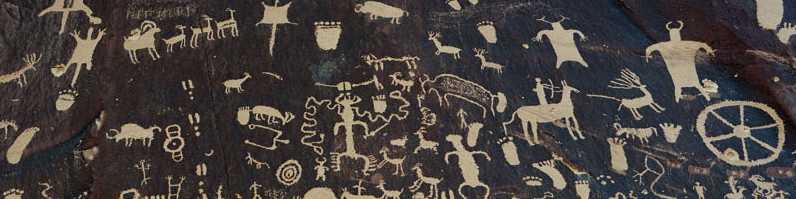
Native winter solstice traditions

There Goes the Sun

By Richard CohenSacrifice is a common thread. In areas of northern Pakistan, men have cold water poured over their heads in purification, and are forbidden to sit on any chair till the evening, when their heads will be sprinkled with goats’ blood. (Unhappy goats.) Purification is also the main object for the Zuni and Hopi tribes of North America, their attempt to recall the sun from its long winter slumber. It also marks the beginning of another turning of their “wheel of the year,” and kivas (sacred underground ritual chambers) are opened to mark the season.And:The turning of the sun was perhaps even more important in the New World than the Old. The Aztecs, who believed that the heart harbored elements of the sun’s power, ensured its continual well-being by tearing out this vital organ from hunchbacks, dwarves or prisoners of war, so releasing the “divine sun fragments” entrapped by the body and its desires.

The Incas would celebrate the solar festival of Inti Raymi by having their priests attempt to tie down the celestial body. At Machu Picchu, high in the Peruvian Andes, there is a large stone column called the Intihuatana, (“hitching post of the sun,”) to which the star would be symbolically harnessed. It is unclear how the Incas measured the success of this endeavor, but at least the sun returned the following day.
Compare these to equally colorful beliefs in the West:In Christendom, the Nativity gradually absorbed all other winter solstice rites, and the co-opting of solar imagery was part of the same process. Thus the solar discs that had once been depicted behind the heads of Asian rulers became the halos of Christian luminaries. Despite the new religion’s apparent supremacy, many of the old customs survived—so much so that church elders worried that the veneration of Christ was being lost. In the fifth century, St. Augustine of Hippo and Pope Leo the Great felt compelled to remind their flocks that Christ, not the sun, was their proper object of their worship.

While Roman Christianity was the dominant culture in Western Europe, it was by no means the only one. By millennium’s end, the Danes controlled most of England, bringing with them “Yule,” their name for winter solstice celebrations, probably derived from an earlier term for “wheel.” For centuries, the most sacred Norse symbol had been the wheel of the heavens, represented by a six- or eight-spoked wheel or by a cross within a wheel signifying solar rays.

The Norse peoples, many of whom settled in what is now Yorkshire, would construct huge solar wheels and place them next to hilltop bonfires, while in the Middle Ages processions bore wheels upon chariots or boats. In other parts of Europe, where the Vikings were feared and hated, a taboo on using spinning wheels during solstices lasted well into the 20th century. The spinning-wheel on which Sleeping Beauty pricks her finger may exemplify this sense of menace.
Comment:  For more Native versions of holidays, see Native Ornaments on "History Tree" and 41st National Day of Mourning.

Below:  Primitive sun/son worship.

Unsung hero of Nixon administration

Doug George-Kanentiio:  Navajo man helped save environmentLes Lobaugh is, according to Mary Louise Uhlig of the Environmental Protection Agency, the most "influential, important and anonymous Native lawyer in America."

At the event to mark National American Indian Heritage Month at the EPA held in Washington, DC on November 4 Lobaugh was the featured speaker. His presentation followed a performance by Joanne Shenandoah whose music celebrated the the great influence Native people have had on environmental issues.

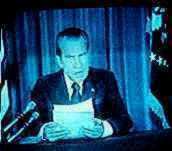
Ms. Uhlig told the assembly of EPA workers that Mr. Lobaugh drafted the Endangered Species Act, followed by the Clean Water Act and the Clean Air Act which in turn led to the formation of the EPA; all of which took place during the Nixon administration.

Literally millions of animals, plants and fishes can attribute their survival as specific species to the protection given to them by the federal statutes initiated by Mr. Lobaugh.
And:In his remarks following the introduction Mr. Lobaugh spoke with passion about the natural world. He cited Christopher Columbus as an example of the great differences between the Europeans and the Native people with regards to the earth.

While aboriginals viewed the earth as a living organism upon which sustainability was a key principle Columbus saw the land from a purely economic perspective Lobaugh said. The European explorers carried with them not only a conflicting philosophy about nature they also brought diseases which killed millions of Natives and made the colonization of the Americans possible Lobaugh observed.

Lobaugh noted that the "attitude of conquest and subjugation extracted a heavy price" which began to change a generation ago a change began in what he said was a "reevaluation of our relationship to the environment" which in turn has brought the US closer to the native ideals of sustainability.

But, he warned, there was cause for concern, noting that there are many who now want to retreat from the environmental standards set by law. He said that there are politicians and developers now claiming that environmental protection rules are an "attack upon our basic freedoms" which may well lead to a return to "conquest, subjugation and exploitation." Some, he warned, have gone so far as to demand the dismantling of the EPA.
Comment:  For more on Richard Nixon, see Iron Eyes in Frost/Nixon and "Dickie, Don't Forget the Indians." For more on Western vs. Native values, see Columbus the Cannibal and Why We Believe in Columbus.

INDN’s List calls it quits

Native political group calls it quits

By Kevin AbourezkA grassroots Native organization that recruits and supports Indian candidates is closing its doors after failing to gain sponsors.

INDN’s List began in 2005 as a way to get more Indian candidates elected throughout the country. President Kalyn Free announced Monday the organization was closing shop.

“In 2009 and 2010, I personally financially supported INDN’s List and paid most of our overhead and salaries,” she said. “Regrettably, we have simply been unable to expand our donor base beyond a handful of visionary tribes, unions and individuals.

“As we say goodbye to another year, we also say goodbye to INDN’s List.”
Comment:  The loss of INDN's List is unfortunate. This is the kind of endeavor that wealthy tribes should support routinely.

For more on the subject, see Indians Elected in 2008 Too and Indians in the 2008 Election.

December 19, 2010

The Last Hunt in Bonanza

The Last Hunt is the 15th episode of the Western TV series Bonanza. Here's a synopsis from AllMovie.com:While on a mountain expedition in the dead of winter, Hoss and Little Joe come upon an Indian woman (Chana Eden) who is about to give birth. Building a shelter for the woman, the two Cartwright boys stay by her side until the baby is born, then bring both mother and child back to the Ponderosa. Written by Donald S. Sanford, "The Last Hunt" was originally telecast on December 19, 1959.A fan adds some comments:Hoss, a dimwit just a few episodes ago, now seems to have the knowledge it takes for this childbirthing. Presumably, his knowledge comes from delivering farm animals; a few episodes previous to this, he didn't know what a naked female looked like, but he seems to figure everything out here, and handles the task just as skillfully as Dr. Welby might have done. If that's not absurd enough, the pregnant Native American doesn't look like a Native American, nor does she look pregnant.Rob's review

The Shoshone woman is played by Chana Eden. Judging by her birthplace in Haifa, Israel, she's probably Jewish. She certainly doesn't look like an Indian except for her slightly dark skin.

The norm in Bonanza is that non-Indians wearing black wigs with braids and headbands play the Indians. The Last Hunt is no exception.

Other than the headbands and a chief's suspect headdress, Bonanza's Indians wear nondescript buckskins. This is better than the half-naked men and mini-skirted women we often see.

With its references to the Shoshones and Paiutes, Bonanza continues to get its basic geography straight. Which is more than many movies and TV shows can say.

The episode is another in Bonanza's series of episodes sensitive to Indians. Although the Cartwright (innocently) use the words "Injun" and "squaw," they don't have a negative thought about Indians.

In fact, Hoss and Joe seem to have an inordinate amount of Indian-style survival skills: preparing meals from native plants, making weapons and hunting without guns, etc. Did they ever show these skills again, or were they a one-time invention for this episode?

Secrets revealed

[**spoiler alert**]

The baby is blue-eyed, which means its father is white. The woman is fleeing to join the man, a resident of Virginia City.

Her people are chasing her, but it's not clear why. Do they want to kill her for consorting with a white man? Or do they want the male baby to continue the chief's line?

With a title like The Last Hunt, you can guess this episode doesn't end well. The woman makes it to the Ponderosa, but then gets a fever and dies. Nobody except the white men did any hunting, but when an Indian dies, I guess it's automatically "the last hunt."

Jason, the baby's father, arrives and says he married the woman in an Indian ceremony. Naturally Jason's father, a wealthy businessman, doesn't approve. But the Cartwrights don't bat an eye because they're as tolerant as a liberal TV writer in 1959.

Alas, Jason is too late. As they bury the woman, the Shoshone chief rides up. Jason gives him the baby, then gets in his horse-drawn carriage and rides off with the Indians. "I'm going home," he tells his father. He's going to live among the Shoshones with his child, presumably.

I guess that means the Shoshones approved of the marriage and would've let the couple live with them. But Jason left them because he was too weak to go against his father's wishes. Which means the Indians probably weren't trying to kill the woman, but only to return her and the baby.

Romantic tragedy

The Last Hunt a reasonably effective episode, although it would've been better to introduce Jason and his father earlier. Hoss and Little Joe wring a fair amount of humor out of their "stranded in the mountains" scenario.

Of course, the Shoshone woman remains a cipher. Other than loving her baby, she has no significant traits. The show doesn't even give her a name.

This is Bonanza's take on innumerable legends about an Indian woman--usually the chief's daughter--who falls in forbidden love--with an Indian from another tribe, or a white man--and dies. We've seen such legends several times--e.g., in Legends of Chief Matilija, Legend of Lovers Leap, and The Myth of Princess Wenonah. The common theme is the tragic romance of Indians embodied in the star-crossed lovers. So noble, so sad to see them go, so gone. Doomed to die and disappear in a world that couldn't let them live.

Of course, this tragic presentation obscures the role of the US government and land barons like the Cartwrights in robbing the Indians. And it obscures the fact that Indians continued to live, fight, and demand justice from their oppressors. You'd never guess from this simple tale that Indians were locked in political and legal battles with the white-ruled system.

For more on romanticized Indians, see Painting Natives in Ceremonial Garb and Love/Hate Relationship with Indians. For more Bonanza reviews, see The Paiute War in Bonanza and Day of Reckoning in Bonanza.

Below:  The Last Hunt's ending with its gentle message that love is thicker than blood.

Nanook Iluak in NORTHERN GUARD #1

Comics critic Greg Burgas writes about a new Native superhero in What I bought--15 December 2010:On the first page, a woman named Anne Knight tries to stop an illegal drilling operation in the frozen north of Canada. The bad guys turn guns on her, and she tells them it’s a bad idea. She chants in a strange language, calls down a snow tornado, and transforms into an Indian superhero. Anne Knight wears a parka and long pants, as it’s freakin’ winter in northern British Columbia. Nanook Iluak, the native spirit of the polar bear and Big Woman of the North, wears … a fur bikini. Bwah-ha-ha-ha! Seriously--she wears a big cloak, fur on her forearms (but no gloves), a fur brassiere laced up the front, a fur thong, and fur knee-high mukluks. It’s awesome. She looks like Raquel Welch. At least her feet are warm!

I’m not too bent out of shape by it, because it’s just a goofy costume, and Nanook is some kind of spirit, so she probably doesn’t feel the cold. It just cracked me up.
Comment:  Given her name, Nanook Iluak is probably Inuit, not Indian. They're not the same thing.

Her appearance is pure Hollywood starlet--a body type almost unknown among the Inuit. In other words, she's your typical Native sex object. She comes from a long line of Native sex objects beginning with Malinche and Pocahontas. As well as a long line of Inuit women who supposedly gave themselves freely to men.

Compare her to Snowbird, a similar superhero who's a spirit woman of the north. No big breasts or exposed skin, yet still an effective character. If she weren't half Caucasian, she probably wouldn't be so statuesque, either.


Yoga and Native teachings combined

Native American traditions and yoga combine for a holistic holiday

By Renee LorenzHaving so much to do within so little time can quickly cause an imbalance in the lives of even the most skilled holiday veterans.

It's this imbalance that Dennis Hawk, a Native American spiritual teacher and yoga workshop leader, seeks to help others correct. Hawk, a Cherokee and Mesquaki descendant, combines the healing practices of yoga with Native American teachings as a way to help promote an overall sense of well-being and connection to the natural world.

"In today's society, especially with all the technology we use, we get disconnected from the natural world," he says. "We as people have a yearning to reconnect with that."

To help address this, Hawk has developed workshops that uniquely combine the physical expression of yoga and Reiki practices with his spiritual teachings, which use a combination of music and Native American spiritualism.

"Yoga and Native American teachings fit so well together," he notes. "The concepts used in East Indian and Native American spiritual practices aren't so far apart."
Comment:  On the other hand, a friend who is interested in both yoga and Native teachings considers it strange to combine them and thinks they should be kept separate.

For a related subject, see Indians and Buddhists Make Peace.

Below:  "Hawk, a Cherokee and Mesquaki descendant, uses Native American flute music to help others reconnect with the natural world."

Whales vs. ocean pollution

Author’s book benefits ocean health research

By Richard WalkerRoyalties from “Last Song of the Whales,” a novel by Cherokee/Creek author and educator Wahinkpe Topa, will benefit Algalita Marine Research Foundation, which is documenting the impacts of plastic debris on the oceans.

The book is about “a remarkable partnership between whales and man, intended by the whale to conquer the growing plastic debris problem,” the author wrote. “I really want to raise consciousness with this book about this issue as well as raise funds for Algalita’s research on this issue. … I sincerely hope my first work of fiction will have a significant impact on helping us return to a balanced way of living by remembering our non-human teachers.”

The book, published by Savant Books in Honolulu, is endorsed by The Cousteau Society.

In “Last Song,” a humpback whale mysteriously takes a mixed-blood American Indian professor to sea. While struggling to survive and learning to communicate with a pod of whales, the man rediscovers his indigenous roots. In the process, he learns that thousands of whales may be on a suicide mission in the North Pacific in an effort to end human pollution of the ocean. However, when he realizes the dire effects the whales’ actions could have for all of life on Earth, he and the whale work together–against all odds–to warn the world in time.
Someone named Lakota added:I've read Last Song and strongly recommend it for impactful gifts this season. It is only 15 bucks at amazon. Easy to read, I could not put it down till I finished it. I cried, cringed, laughed and have a little hope for the future.Comment:  For more on Natives and whales, see Real Conflict in Everybody Loves Whales and Tashtego in Moby-Dick.

December 18, 2010

US may acknowledge Indians' existence

Here's my sarcastic commentary on the US's timid support for the UN Declaration on the Rights of Indigenous Peoples:

News flash:  Obama formally recognizes that Indians aren't a figment of America's imagination. May sign document saying they still exist.

But that may be too risky in today's political climate. Republicans pointed to a Fox News report that said 58% of Americans think Indians are dead and gone, 27% believe they're still alive, 11% don't know for sure, and 4% are blithering idiots.

Fox officials denied charges that they made up the numbers out of thin air. "You're thinking of global warming," said one Fox-faced liar.

Conservative commentators latched on to a report by the respected Creation Scientists for White Anglo-Saxon Protestants. "Were there any Indians in the Bible?" said a spokesman/janitor for the organization. "Has anyone seen any Indians recently? No and no.

"Our scientists assure us that any Indians went to the happy hunting ground in the sky after God exterminated them for their unholy sins. If you see an alleged Indian these days, it's probably a white person playing dress-up for Halloween. Or to cash in on a casino."

Glenn Beck chimed in to remind people that any still-existing Indians are actually from the lost tribe of Israel aka Jews, and therefore part of the worldwide conspiracy and not real Americans.

Obama is reportedly seeking a compromise with House Republicans over the question of the Indians' continued existence. Said one craven White House official, "We're proposing that they live on in our hearts and minds, but don't have a physical existence that requires government aid. We think that will satisfy liberal yearnings for a romanticized past and conservative yearnings for fiscal responsibility."

For more on the subject, see Tea Party Guide To American History and Tea Party Halloween Costumes.

P.S. Thanks to a Facebook friend for the Glenn Beck comment.

Cherokee Soap Factory

Cherokee Nation citizen produces culturally inspired soap

By Tesina JacksonPhillips’ business, the Cherokee Soap Factory, is located in his garage, but he hopes to expand his business some day, he said.

Each soap he creates is inspired by and named after the Cherokee seven sacred directions–North, South, East, West, Sun (up), Earth (down) and Self (where one is).
Some of the soaps:The East-inspired soap is made from olive, palm and coconut oils to revive and renew the skin. The Self-inspired soap is made from canola, soy and coconut oils to moisturize and soothe as it cleans. The North soap is made of natural sea salts and grape seed oil. It can be used to soften the skin and bring freshness to it.Comment:  Is it just my imagination, or do all these soaps do the same thing?

For more on Cherokee businesses, see Cherokee Nation's Entrepreneurship Day.

Below:  "Cherokee Nation citizen Ed Phillips scoops soap into a mold where it will solidify and be ready to cut into bars." (Tesina Jackson/Cherokee Phoenix)

Native ornaments on "history tree"

Gallery features branches of Native American culture

History tree is holiday fixture at Prairie Star

By Beth Wischmeyer
History lines the walls and the shelves at Prairie Star Gallery on a daily basis, but during the holiday season, the history of various Native American tribes come together to decorate the branches of a 12-foot-tall Christmas tree.

The tree features dozens of handmade ornaments by more than 100 Native American artists who send in their holiday fare all year long to be displayed on the tree.

The tree's purpose, Boyd said, is to bring together the history and culture of all types of Native American tribes and celebrate the holiday season. It has been a fixture of the store for about 14 years.
Comment:  For more on the subject, see Blackfeet Ornaments at White House and Setting Up the NMAI Holiday Tree.

Below:  "Prairie Star gallery employee Harry Bucholz decorates the 12-foot "History tree" for Christmas in the gallery on Wednesday afternoon. The tree features ornaments from about 100 different artists." (Jay Pickthorn/Argus Leader)

Cheyenne River Glitter Girls

Glitter Girls spread positive message at LNI

By David MontgomeryThere’s more than Lady Gaga in the air when the Cheyenne River Glitter Girls dance squad practices its moves.

When the Glitter Girls meet every Sunday to work on their routine, the dancing comes only after the life lessons.

“We have a ‘girl talk,’ where the girls are able to talk about different problems they’re having with school, if they’re having problems at home,” Jessica Four Bear said before a performance Saturday at the Lakota National Invitational in Rapid City.

Four Bear founded the dance squad and still leads the group. For nine years, the 6- to 12-year-old girls of the dance squad of the Cheyenne River Sioux Tribe have been combining dance with opposition to bullying, drugs, gangs and suicide.
Comment:  For more on the Lakota National Invitational, see Basketball Tourney Becomes Cultural.

Below:  "Pearman Aaron, 10, shows off her makeup after the Glitter Girls' performance during halftime of the Pine Ridge and Red Cloud basketball game." (Kristina Barker/Journal staff)