March 09, 2012

Negative stereotypes in Blackstone

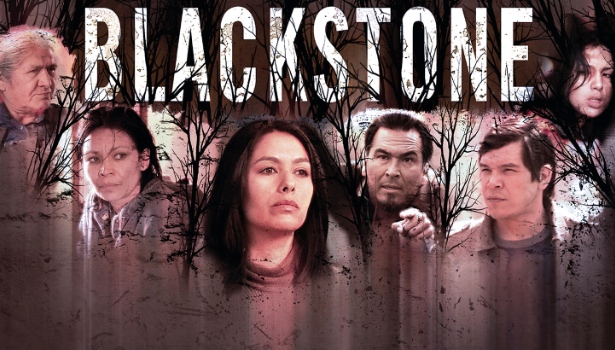
The Media Indigena blog reports a series of tweets on Blackstone, the controversial APTN TV series:

Does gritty APTN series ‘Blackstone’ deserve a third season? Viewers weigh in on-line

First, some negative views:If images shape aspirations, what does @BlackstoneTV do 4 our FN children? Perpetuates stereotypes & negative self-image. For what? Ratings?Dr. Pam Palmater@BlackstoneTV Art should make us think in a different deeper way, and not be just a spectacle for colonial consumption.Taiaiake AlfredI watched the 1st few episodes of @BlackstoneTV thinking it would get better & show hope. It didnt, so I couldnt keep watchingKen SandersonOthers are more positive:@Taiaiake I like that it boldly explores some of the issues but dislike how it reinforces stereotypes! #blackstoneMs Daum@BlackstoneTV @mizthrush Stunning & very poignant ending to the season. The acting is 1st rate and immensely powerful & relevant. Well doneLisa M.@BlackstoneTV people need to chill out. Blackstone is only a tv show. Its fictional, enjoy it, cuz its just entertainment.GeebearCritics weigh in

The Controversy that is Blackstone

By Melanie FerrisThere’s good reason for the strong reaction. The characters are all too real, hitting a nerve with many Aboriginal viewers. Blackstone brings to life complex individuals who struggle with internal dialogue about whether to take that next drink, how to release their haunted and dark pasts, or whether to dump that cheating yet charming jerk of a husband.

I’ll admit that it’s painful to watch a performance such as that of Gail Stoney (Michelle Thrush, who won a Gemini award for her work on this role) or her now-missing friend Tracey Bull. Seeing these women drunkenly stumble through ditches, pick up random men in dive bars, and hitch a ride home to the reserve is disturbing. Many of us know an alcoholic and Thrush’s portrayal of someone suffering with the disease nailed it. Many of us are uncomfortable dealing with alcoholics in person, let alone having to watch them on TV in our downtime.

While you might worry about Blackstone reinforcing negative stereotypes, it is important to look closely at the complex storylines, centering around the two main characters of Gail and her sister Leona.
Blackstone is a big step

By Colleen SimardBlackstone isn't for the faint of heart. The first episode alone covers corruption, alcoholism, sniffing, sexual assault and teen suicide. Swearing like a sailor also seems to be the norm on this fictional reserve. But the dialogue is also strikingly realistic; anyone who's ever spent time on the rez will see reflections of people they might even know.

It's not all doom and gloom. By the second episode, the writers have thrown a taste of our sense of humour into the mix.

And despite many warm reviews, Blackstone has gotten a bit of criticism.

Chief Terry Nelson of Roseau River First Nation emailed a scathing review to the media condemning the series.

"What will come out of the series will reinforce the stereotypes, the lazy drunken Indians, the easy women, the corrupt chiefs and councils etc.," writes Nelson.

"Gordon Tootoosis' character says, 'The white people have the Mafia, we have chief and council.' The rednecks will cream themselves on that comment coming from a Cree elder."

There's some truth to Nelson's statement. These characters aren't candy-coated--with a passing glance they could be seen as stereotypes. But sit down and watch the show for a while.

Many of the characters are dealing with serious problems, much like the problems we all deal with in real life.

This is dramatic fiction. That's what it's all about.

Blackstone is a step in the evolution of TV and film that aboriginal people need to take. One day we'll have our own version of The Cosby Show or George Lopez, but first we've got to define ourselves and deal with the more pressing issues at hand.
Column: APTN’s Blackstone tackles tough issues in First Nation communities

By Maureen GoogooI’m intrigued by Blackstone for several reasons. For one thing, the show doesn’t try to pander to a non-aboriginal audience. The very raw narrative is told through the band members of Blackstone. The issues this community struggles with are internal and the community tries to deal with them internally.

I believe anyone who has lived in a First Nation community in Canada can identify with the show’s characters and plot line. All of these characters have real-life counterparts in our communities. We all know someone who is struggling with alcoholism and drug addictions. We have either been directly or indirectly affected by the suicide of a friend or a loved one.

We also know how ugly and stressful band politics can be. It affects entire families, not just individuals. While I’m not saying every First Nation in Canada has a corrupt chief and council, I think we all can point out bullying leaders who use their positions for personal gain and abuse their powers to silence critics.

Very few journalists have been able to penetrate First Nation communities to cover these serious issues. There are many band members who will complain about corruption by their chief and council but very few of them are willing to stick out their necks to go on the record. Doing so may mean they become the targets of bullying and intimidation by those in power.

As a journalist who has covered aboriginal issues in Atlantic Canada for many years, I’ve tried unsuccessfully on several occasions to get people to talk about alleged corrupt practices during band elections for news stories. They’re unwilling to go on the record because they don’t want to be seen as opponents to the elected leadership; such a designation could cost them consideration for a job interview or future housing repairs. Also, no one wants to publicly admit they have participated in an alleged vote-buying scheme.

This is why I’m so envious of Blackstone’s writers for having that luxury of delving into and examining these harsh, real life issues through the fictionalized community of Blackstone and its cast of characters. They can amalgamate all of the stories of addictions, suicide, and band corruption into the storyline of Blackstone to show how people can, or cannot, cope with this type of adversity on a daily basis.

The very raw and authentic themes may make some people feel uncomfortable. There has been some criticism against the show and its producers for perpetuating even more negative stereotypes of aboriginal people.

For me, I applaud the show for deciding to take on the task of tackling these issues. According to the show’s website, www.blackstonetheseries.com, “Blackstone is foremost a story of hope and reconciliation in its portrayal of Native people fighting for a better life in their community.”
Comment:  I haven't watched Blackstone yet. But it sounds a lot like the SCALPED comic book, which I've criticized repeatedly.

The first question is how real are Blackstone's negative portrayals. SCALPED's portrayals seemed way over the top to me--something like 90% negative. No Native community that I've seen or read about is that dismal.

Blackstone's defenders seem to be arguing that the show may be stereotypical, but it's also real. That's a dubious argument. The show is either stereotypical or real, but it's not both. If bad things happen as often in reality as they do on Blackstone, the show isn't stereotypical.

For the sake of argument, let's say Blackstone isn't any worse than real rez life. The second question is whether a show this brutal helps or hurts. After watching it, do Natives actually feel a sense of hope and reconciliation? Or do they just feel upset and angry at seeing problems without solutions?

And do non-Natives gain a greater understanding of and sympathy for the struggles on a reservation? Or does Blackstone merely reinforce their negative, stereotypical beliefs?

I hope these aren't just rhetorical questions. Someone could do a psychological study and measure the effects of Blackstone on Native and non-Native minds. The results would be fascinating, and they might end these endless arguments.

For more on Blackstone, see Blackstone Actresses Nominated for Gemini Awards and Sopranos-Style Blackstone Debuts.
Steel Ponies at the Eiteljorg

Steel Ponies thunder into EiteljorgSo, you’ve watched American Pickers and American Choppers a few times and you think you know a thing or two about “knuckleheads.” Maybe you spent hours searching your mom’s attic for your old Evel Knievel wind-up stunt-cycle toy. Or maybe you’re an old anti-establishment hippie and your poison is Easy Rider. Fear not, you can get your fix at the Eiteljorg Museum Of American Indians And Western Art. The museum’s newest exhibition, Steel Ponies, showcases the artistry, history, and culture of motorcycles in the American West and Native America.The Native aspects:Some of the coolest bikes are in a section of the exhibition called “Native American Appropriation and Pride.” Taking pride in his Lakota Sioux heritage, Troy Vargas of Lakota Choppers custom-built a chopper called Great Spirit, using materials such as hide, wood, and stone in his creation. Sharing his vision of the Great Spirit (Wankan Tanka), the most striking feature of the bike is the colorful headdress encircling the gas tank. “Do you see the feathers?” James asks. “They look real, don’t they? They’re metal!” We’re stunned at the artistry in this chopper—and the exhibition itself.The Eiteljorg Museum of American Indian and Western Art’s Steel Ponies Exhibit OpensIndyStar.com makes the point that in many cases, motorcycles replaced the horse in Western culture. Many brands co-opted Indian names for their models—the Chief, the Princess and the Scout are examples the website uses.

“Say what you will about the stereotypical imagery or the fashion in which Indians promoted their products, there are still Indian people . . . who love and ride Indian motorcycles,” said White Wolf James, a Pomo Cherokee who hails from Mendocino County, California to IndyStar.com.

James is the Eiteljorg’s assistant curator of Native American art, history and culture. He told IndyStar.com that the exhibit is about the intersection between American Indian culture and the emergence of the motorcycle in the 20th century as an iconic means of self-expression.

Featured in the exhibit will be bikes such as the bike built by Troy Vargas of Lakota Choppers that incorporates hide, wood and stone, or the board-track racer built by Daniel Sanchez, Apache, that will be unveiled at the exhibit. Sanchez will be at the museum on April 14.
Comment:  Give these articles credit for not gushing about the well-known Indian Motorcycle brand.

Note: A person could be a Pomo/Cherokee Indian, but not a Pomo Cherokee.

For a previous Eiteljorg exhibit, see Black/Red: Related Through History.

Aboriginal entrepreneurs on Boom Box

Brett Wilson launches aboriginal entrepreneur challengeSaskatchewan-born businessman W. Brett Wilson is teaming up with CBC to host the Boom Box—a program where young aboriginal entrepreneurs get to pitch their ideas.

Wilson was born in North Battleford, made his fortune in the oil and gas industry, and became a TV personality as a panelist on Dragons' Den.
Comment:  For more on Native entrepreneurs, see Top 10 Native Entrepreneurs and Cherokee Nation's Entrepreneurship Day.

March 08, 2012

Play portrays Ishi as rapist, murderer

A new Ishi play recently opened and closed. Here's the scoop:

UC presents a searing play about Ishi, the last of his tribe

By Frances DinkelspielIshi’s story and the deliberate slaughter of his tribe is effectively, if brutally, told in John Fisher’s ambitious play, Ishi: The Last of the Yahi, now being presented by the UC Berkeley Department of Theater, Dance and Performance Studies at Zellerbach Playhouse. The play closes March 11.

It is an entertaining, although deeply disturbing, play, filled with scenes of prejudiced white men massacring Indians for a $5-a-head state bounty, gunfire, rape, murder, cannibalism, and even academic jealousy. But if you are shocked and disturbed after seeing it, (and at three hours long, you see a lot) then Fisher, the artistic director of Theater Rhinoceros in San Francisco and a frequent lecturer in the theater department, will have attained his goal. He clearly wants to tell people about this unknown chapter of California history: that the slaughter of Native Americans also happened here, not just at Wounded Knee or on the Trail of Tears.
Sounds good so far. But audiences were shocked at more than the whites' crimes against the Indians.

New: EYE FROM THE AISLE: “ISHI, the last of the Yahi” reprise at UCB Zellerbach Playhouse

By John A. McMullen IIAt Zellerbach Playhouse on the UC Berkeley Campus, the opening scene of John Fisher’s ISHI, the last of the Yahi, appropriately enough, is a lecture by a young anthropology professor who relates the shocking incident—enacted for us—of a starving gold prospector who kills and eats a Native American. In the first of many action scenes, the prospector chases him around the spacious Playhouse underscored by banjo breakdown music (think “Smokey and the Bandit”). Finally, the weakened prospector shoots the Indian and eats him (offstage).

I scratched my head. Was this a comic scene? Why didn’t the prospector just shoot him to begin with instead of chasing him? And how could a starving man keep up the chase like that?

That was my question at the start of the play. My question at the end of the play—THREE HOURS LATER—was why didn’t award-winning playwright John Fisher take this opportunity to rewrite this play that premiered four years ago at Theatre Rhino with an eye to shortening and tightening this intriguing script.

“ISHI, the last of the Yahi” is epic in its breadth. It is about the genocide of the Native American tribes as financed by the legislature of California by way of a $5 bounty per head. It is about a man whose culture was destroyed and was starving in the wilderness before giving up and coming into the white man’s town of Oroville in 1911, fully expecting to be killed. It is about the anthropologist who befriends him to study him. It is about ambition, using others, and then turning on them. It is about man’s criminally ambitious culture, under the motto, “Homo homini lupus” (trans., man is a wolf to man). It has a little O’Neill, a little Albee, and a lot of history that UCB TDPS department lecturer Fisher liberally tweaks with poetic license.

Telling this tale educates us about the horrors and blood-money on which our society is founded.

Emotionally, its intention must be to break our hearts for this abandoned man and how his story affects those who first hear it.

Regrettably, by the end of the evening, the result is numbness from the length and repetition of horrors.
You may recall that I discussed "poverty porn" a few months ago. This sounds like "genocide porn." It sounds like it would numb and bore people more than educate and enlighten them. But neither critic has talked about the play's real problems.

Ishi: the Last of the Yahi: A UC Berkeley Production that Perpetuates Gross Violences Against Native Peoples

By Tria AndrewsWhile the play pretends to present disparate and diverse versions of history—to speak from Ishi’s perspective—in truth, the production is about the European-American characters going native. Going native, as defined by Native scholar and UC Berkeley Professor, Shari Huhndorf, is a trope aimed at alleviating White guilt regarding the violent founding of the nation while simultaneously reinforcing White supremacy. While constructed around the character of Ishi, whose image is exploited on the production’s brochure, the protagonist of the play is in fact Dr. Alfred Kroeber, the primary anthropologist who studied Ishi. By purporting to be a play about the last of the Yahi (underscored by the play’s title), the production diminishes White guilt by representing Native peoples as extinct and Whites as the rightful owners of the land. In the falling action of the play, Ishi’s ghost—after his body is dismembered and dispersed throughout numerous institutions in the U.S. against his wishes—rises from the dead and assumes the third person plural, “we.” Here, Ishi’s adoption of “we” endeavors to downplay the violences against Native peoples, which the play in fact fetishizes. In other words, after his death, Ishi supposedly becomes a White man and in doing so, attempts to warrant the dispossession of Native peoples from their land.

While the play’s concluding characterization of Ishi as a European-American commits yet another horrific act of violence against Ishi, unfortunately, the play also fetishizes violence to Native characters’ bodies—or the bodies or non-Native actors playing Indian. The opening scene reveals a Native man in a loincloth who is chased by a White man wielding a gun. The White man is starving and intends to murder and eat the Indian. This action takes place both center stage and off stage as the actors circle the audience and whoop. One character warns another not to “pollute the [Indian’s] flesh with bullets.” These scenes of gruesome violence are staged as spectacle and rationalized in the narrative. Three White men brutally murder an Indian man, whose death the audience witnesses in scene. The Indian is beaten, tied to a stake, knifed, and finally, set on fire. This dramatization of violence, like others throughout the play, is accompanied by the bloodcurdling screams of the Indian characters. At one point in the play, while European-American characters are brutally beating an Indian, an image of a White woman wrested by two Native men is projected center stage to seemingly justify the violence committed against the Indian. As the play makes clear, the violences against Native peoples continue postmortem as Native remains are stored in museums and universities, such as UC Berkeley, which currently houses 12,000 human skeletons. However, the production commits even further violences. Through Ishi’s perspective, Native remains are labeled “evil," and the housing of these bodies in museums and institutions is presented as an unavoidable and resolved circumstance, which is certainly not the case given the 1990 Native American Graves Protection and Repatriation Act.

Considering the immense violences that Native peoples—and in particular Native women—continue to endure from non-Natives, violent scenes, which are unsparingly utilized in the performance, reveal disgusting and insulting displays of ignorance. European-American men and Ishi himself beat and threaten Native women or “squaw[s]” as the cast list derogatorily refers to one of the female characters. In the play, Native women, unlike their European-American counterparts (with the exception of Dr. Saxton Pope, M.D. who goes native, donning a two piece buckskin ensemble while simulating masturbation), are not only sexualized, but also beaten and raped. The depiction of Native American women as promiscuous, their bodies, like the land, seducing European-Americans, is yet another racist trope that the production cannot resist. Ishi’s narrative, which the main characters expend most of the play attempting to extract from Ishi, is presented in two versions, both of which render a Yahi woman, Ishi’s sister, as incestuous, murderous, and inherently rapeable. Rape, as Cherokee activist and writer Andrea Smith highlights, is a tool of conquest. Yet, the production portrays Native men as rapists and Native women as enjoying their violability because of their cultural upbringing: “Copulate and rape are not different words in Yahi.” This Western, patriarchal portrayal of violence against Yahi’s sister, who revels in her own rape so much so that she seeks out her rapist—also her parents’ murderer—as a lover and father for her child, is absolutely inexcusable. Yet another irresponsible scene conflates violence with sexuality as Ishi is positioned behind his sister in a manner that suggests intercourse while the two work together to commit infanticide. To add insult to injury, the production completely misrepresents Native conceptions of “balance” or harmony, insisting, “There’s balance in all [Ishi’s] stories.”

But in Ishi: The Last of the Yahi, Ishi’s so-called stories are not his own. They are stories of Ishi narrated through a Western lens. I could continue by citing the multiple violences against Ishi and Native peoples that the play commits and which I have not yet specified: unproblematizing privilege and power dynamics; portraying Ishi as childlike, savage, and subordinate; reinforcing racial and gender binaries, etc., but I want to conclude in a way that is more useful.

As a mixed race (Cherokee, Irish, and Filipina) woman, who identifies as indigenous and who was required to watch this production for a class, I want the director, cast, and crew to try to understand what it was like to be a Native person in the audience. The jolt sent up my spine when I read word “squaw” in the cast list, the knot that took root in my stomach and held while I witnessed the gunning down of an Indian in the opening scene, the stiffening of my shoulders when I was surrounded by staged violence accompanied by the villainous laughter and whoops of European-American characters in a play that professes to treat the history of our nation and the mass murdering of Native peoples as “gray matter.”
I went to see "Ishi: Last of the Yahi" at UC Berkeley and all I got was this blog entry. (Review)

By Cutcha Risling BaldyFirst let me tell you about the point where I almost walked out. Ishi, having been living in the Museum of Anthropology at UC Berkeley for a few years was finally brought back to his home (Deer Creek) by Alfred Kroeber, his junior faculty Thomas Waterman and Dr. Saxton Pope (who will eventually be the person that betrays Ishi's wishes and dissects his body and harvests his brain to send to the Smithsonian). At Deer Creek a number of "hilarious" things happen, Kroeber admits that he doesn't really like nature all that much (and misses his wife), all the European American characters get together and sing cute little songs like "She'll be comin' round the mountain when she comes (yee haw)" and Dr. Saxton Pope (of the brain harvesting popes) "goes Native" where she dresses in a two piece buckskin outfit (am I to assume she bought these from a street vendor in Berkeley before she left? Or perhaps at Forever 21 or Urban Outfitters?) and simulates giving birth while whooping, hollering and standing up. She also tears the umbilical cord with her teeth, as a real Native woman would do.

It's meant to be tongue in cheek, I get it. These crazy European American scholars, tee hee, ha ha.

In the mean time, they want to continue to pressure Ishi to tell his story. His story will make them a lot of money, you see, and "build them a museum."

When Ishi finally does tell his story it rests with the fate of his sister. You see Ishi and his sister had been in an incestuous relationship for a while now but then she was "raped" by a white man. However, when Ishi points this out to her she desperately clings to him and says "First I was unwilling, now I am willing. This makes it alright."

It was at this point I started gathering up my things. I couldn't take it any more. First Ishi is just "a man" and then he is a man who has sex with his sister and then he is a man who kills his incestuous baby by drowning it in a creek because they are trying to get away from being hunted by the "colonizers" of California. And then he is a man cuckholded by his own sister who has to let her go or otherwise she may say things that he doesn't want to hear and "If she said it, I knew I would beat her, I was almost beating her now."

Later Ishi helps to kill her half breed baby, because the sister believes this will mean she can be with her man. Why Ishi helps her is a little unclear. Why he sends her to her death is also a little unclear. Anyway you cut it Ishi's sister doesn't have a name, she's just called "Woman" and in the end her last line is "Good. Dead. Dead for you." I eerily felt like she was speaking to the playwright himself.
Wow. How did the other reviewers not comment on all this? It's not only stereotypical, it's flatly false. As far as I know, Ishi didn't do any of these things.

Baldy's response was similar to Andrews's:At the end of the play, having been subjected to the killing, fileting, burning, raping and molesting of Native peoples all over the stage. After having watched Native characters being "hunted" and chased around the theater, sometimes set to "cartoon" music. After having watched as Ishi drowned his child, beat and "raped" his sister, and was beaten by his own father--I was exhausted. My stomach had a huge knot in the center. My neck was stiff. I listened to the tears falling from other Native peoples in the audience around me. I watched as my cousin clenched her hands tightly together and waited. The lights went up, people applauded, but I and several others around me did not.But wait, there's more. The writer/director held a talk-back session with the audience but said he couldn't or wouldn't explain his thinking.From the audience I heard someone mutter "what?" And I felt the same way. We had stayed because of the "opening of dialogue" and "breaking ground for conversation about sensitive issues" (all statements made at the start of the talk back) and now we were told that there would be no effort to "explain" this "work of art."

The talk back continued with people speaking about the effort to "create dialogue" by the play and "calling attention to these issues." After one audience member asked for a response from the American Indian students about why they didn't like the play a Native man stood up and took the microphone. He couldn't finish his statement and it ended in tears. It was a meaningful illustration of what this play really does, it doesn't open dialogue but glorifies trauma. It erases the real, living Native peoples (some of whom are Ishi's relatives). It forgets that those people could be sitting in the audience. It refuses to dialogue with them when they ask real questions, how can you justify portraying Ishi and his story in this way? Why do you use this opportunity to give him a voice to destroy that voice? Why must you "confront" us with these images of the holocaust and genocide but also include a pseudo-justification for it by allowing that "even the Natives were participating in these atrocities--against each other?" Why would you take a peaceful, intelligent man and belittle his story to a sensationalist, animalistic portrayal? Why will you not acknowledge that your "art" could have been better? And now that you have access to Native people who want to have a dialogue with you and offer real feedback so that you can learn something and also teach others why won't you actually talk to them?
Comment:  I posted a review of this play in July 2008. The critic noted some artistic flaws with it but didn't say much about Ishi's role. It seems non-Indians are somewhat blind to this aspect of the play.

One thing Andrews and Baldy didn't mention: When you focus on the depraved cruelty of white men, it actually becomes easier to dismiss their guilt. You tell yourself, "Those people were crazy. I'd never do anything like that. The conquest and murder of Indians was their fault, not mine. I didn't take the Indians' land or rights, they did."

In reality, of course, 99.9% of Americans didn't kill an Indian personally. Most people never met an Indian. Yet they voted for politicians who carried out the conquest and murder of Indians--people like Andrew Jackson and Abraham Lincoln. Most of the killing happened indirectly--by forcing the Indians onto unfamiliar lands, where they succumbed to disease and hunger.

In other words, genocide was a systematic problem that most Americans contributed to, at least indirectly. Portraying it as acts of torture and murder ignores the larger structural problems. The Euro-American mindset that encouraged land grabs and broken treaties is what ruined the Indians, not individual acts of depravity.

Anyway, this Ishi sounds pretty bad to me. I hope it doesn't appear again without a substantial rewrite. If it does, I hope people protest it.

For more on Ishi, see 100th Anniversary of Ishi's Emergence and Ideas for Ishi Statue.

Below:  "Two bounty hunters shoot at Native Americans. From left: Evan Bartz, Sanford Jackson." (Ryan Montgomery)

Watchman exits America's Next Top Model

Mariah Watchman Makes Early Exit From America’s Next Top ModelOn Wednesday night, Mariah Watchman, who grew up on the Confederated Tribes of the Umatilla Reservation, became the second contestant eliminated on America’s Next Top Model. The modeling assignment for the episode was an Addams Family-themed shoot with celebrity judge Kris Jenner and her daughters Kendall and Kylie. When the judges—Jenner, PR guru Kelly Cutrone, and photographer Nigel Barker— and host Tyra Banks reviewed the “best shots” from the photo session, it was clear that they felt Watchman’s was not strong, although several models seemed to be in danger of elimination.

Although winning the show would, undoubtedly, have been a nice bullet point on her resume, Watchman is hardly a newbie, and will resume her already-successful modeling career. She has been modeling professionally for five years—since she was 15—and is signed to the prestigious Wilhelmina agency.
Also, Adrienne Keene reports an interesting development in her Native Appropriations blog:

Update on ANTM: Mariah's gone, but Nigel might have learned something

A fan tweeted to Nigel Barker, one of the show's judges, about how stereotypical it was to dress a Native model as Pocahontas. Barker acted like he didn't know what she was talking about and said ATNM was responsible only for giving Watchman a shot.

That's a typical response from an ignorant white man, but then Barker (or someone) deleted his tweets. Covering up his racial insensitivity and protecting him from further embarrassment? Quite possibly.

Also worth noting is that Kris Jenner, mother of the Kardashian sisters, is one of the judges. The whole clan has had problems with Native stereotyping before.

As a judge, Jenner may not have had anything to do with Watchman's dressing as Pocahontas. But you can bet she didn't stand up and say it was wrong when she learned of it.

For a previous ANTM contretemps, see "Next Top Models" in Blackface and "Think Native" on America's Next Top Model.

Women skateboarders in Apache Chronicle

Young, Gifted, Native and Female: The Warrior Women of Apache Chronicle

By Jessica R. MetcalfeWhen documentary filmmaker Nanna Dalunde contacted Douglas Miles (San Carlos Apache/Akimel O’odham) of Apache Skateboards, he was skeptical. Dalunde wanted to make a film about the female skateboarders associated with Miles’s skate crew—to investigate why they skate and why they create. The problem? Dalunde is from Sweden. Like many Natives who’ve seen skewed visions of their people on screen, Miles was wary of yet another non-Native filmmaker (even a well-intentioned one) who might depict American Indians from an outsider’s perspective. He wanted to ensure that the skaters would retain rights to how they were represented, and that they would hold partial rights to the documentary as well.

The solution was both unconventional and simple: Miles stepped up to assist and facilitate the project as a co-director.

The result is Apache Chronicle, a 41-minute look at the lives and artwork of five young Native American female artists and skateboarders. It’s a remarkable perspective that we rarely see in documentary film: the young Native female perspective.
Comment:  For more on Native skateboarding, see Skateparks in Native Oklahoma and Birch Bark and Skateboards in Mni Sota.

Below:  "From Apache Chronicle, Lynnette Haozous as Lozen, the famed Chircahua Apache woman warrior who rode and fought with Geronimo's band of renegades."

March 07, 2012

White buffalo hunt in Texas

$13,500 to Kill Sacred White Buffalo in Texas—Can This Be True?American Indians across the internet are flocking to the website of Texas Hunt Lodge today—and not because they’re planning a hunting trip. No, they’re alarmed by a page on the site dedicated to the White Buffalo Hunt Package, which advertises a chance to kill a white buffalo for $13,500.

White buffaloes are sacred animals to the Lakota Sioux and other Native groups, and there aren’t a lot of the creatures around. When one was born last year in Greenville, Texas, it was an occasion for much rejoicing. An article in the British newspaper Daily Mail extensively covered the naming ceremony of Lightning Medicine Cloud. That report said that “Lightning Medicine Cloud, whose name is also a tribute to a white buffalo born in 1933, named Big Medicine, is thought—in Lakota Sioux tradition—to be the third of its kind ever born.”

It may be that not all white buffaloes are created equal, for there is a herd in Bend, Oregon, that contains 11 white buffaloes. Even so, it’s safe to say there aren’t a lot of them; an article on the herd from 2010 said that experts estimate that there are less than 50 white buffaloes in existence.

The sacredness of the white buffalo is linked to the story of White Buffalo Calf Woman, a Lakota prophet who brought the Lakota the Seven Sacred Rituals.


When I saw the first posting of this on Facebook, I immediately reposted it. After that, several others reposted it as well. The brief online protest led to this:

White Buffalo Hunt Causing Uproar Throughout Indian Country Will Stop

By Jack McNeel“We’re outraged,” James Swan remarks regarding the white buffalo hunt offered by a Texas hunting ranch. “We don’t have a problem with people having [white buffalo]. We just have a problem with people making big bucks killing them.”

Swan is a Cheyenne River Sioux tribal member and President and Founder of United Urban Warrior Society. “In our Lakota ways our creation story starts with the white buffalo. Over the centuries the white buffalo, to us, is a very sacred part of our culture and part of our spirituality. Our people didn’t have a written language. Everything was passed down through stories over the centuries and white buffalo was a center part of everything we do.”

The story on the white buffalo hunt was posted to Indian Country Today Media Network on Monday afternoon and kicked off a firestorm of Facebook activity. Late Tuesday, Aaron Bulkley, owner of Texas Hunt Lodge, which advertised the $13,500 buffalo hunt on its website, spoke with ICTMN about the matter. “We’ve had a ton of feedback from people since the white buffalo story came out, and I understand the white buffalo is sacred to Indians,” he said. “It’s been on the website for three years and all of a sudden people are excited about it. I do understand their point. I’m not saying I disagree with it or agree with it but I am going to take it off the website.”

Asked directly if he would be offering white buffalo hunts at all, he responded, “Not for white buffalo.”
Comment:  It's more correct to say the firestorm of Facebook activity triggered the ICTMN posting, I think. Either way, it's another example of a successful protest via social media. The number of victories we're achieving simply by publicizing things is truly amazing.

For more on the white buffalo, see White Buffalo in Popular Culture and White Buffalo = Third of Its Kind?

Video game features Mohawk assassin

Assassin’s Creed III Features Mohawk HeroConsole gamers are drooling over the just-released details of the latest installment of the Assassin’s Creed series, and from the looks of it Natives have reason to celebrate as well. Information leaked to gaming sites describes a protagonist who is half white and half Mohawk embarking on a quest during the Revolutionary War. According to Examiner.com, the character is named Connor or Ratohnhake:ton (Ra-doon-ha-gay-doo), was raised by the Mohawk tribe and vows to fight the power after his village is burned down by white colonists. He carries two pistols, a bow, and a war hatchet.

Connor is an one of the Assassins, who, as established in previous games in the series, are in an eternal battle with the Knights Templar (or Templars). Previous editions of the game have been largely set in the so-called Holy Land (including Jerusalem) in the 12th century and in 15th and 16th-century Italy (Rome, Florence, Naples, Venice), with some journeys to places such as Constantinople (present-day Istanbul, Turkey) and Spain.

This is just about all the information we have, although we can also add some conventional wisdom based on the previous installments of the series: Don’t expect predictable choices for who will be the “good guys” and who will be bad. The gaming experts at IncGames discuss their hopes and expectations for the title, and they admit they were skeptical when they first heard it was to be set during the Revolutionary war. One of them offers this:

I appreciate concerns that AssThree could be at risk of turning into a nationalistic piece of trash like The Patriot, but development is being handled by a French-Canadian team who, let’s face it, are unlikely to be blinded by stars and stripes.

Further down in that discussion, another points out:

If you’re expecting AssThree to extol the virtues of Great American Heroes like George Washington, Thomas Jefferson, Ben Franklin, and John Adams, you may want to think again. In fact, if at least one or two favoured historical figures aren’t evil Templars, I’m going to be both surprised and disappointed.
Comment:  I haven't seen the game, but anyone who's an assassin is more of an anti-hero than a hero. Even if his cause is righteous, if "Connor" is a merciless killer, he'll fall within the "savage" stereotype.

For more on Native video games, see "Native Representations in Video Games" and "Racism, Stereotypes, and the Digitized Indian."

Below:  "From the Assassin's Creed III box cover."

Walmart to distribute Shenandoah's album

Walmart inks distribution deal with Joanne Shenandoah for new album

By Shelley Bluejay PierceWalmart and internationally recognized Native American musician, humanitarian and scholar, Joanne Shenandoah, reached an agreement for distribution of her new album, “Lifegivers.” Set to begin sales today, Walmart carries Shenandoah’s latest album at Walmart stores covering 12 states in the USA.

“Walmart clearly sees the potential in Native American music and has opened their hearts to this art form. When people have a chance to hear the music, they love it! My music is consistent with Walmart’s commitment to enhancing lives and protecting Mother Earth for future generations,” explained Joanne Shenandoah about this distribution agreement.
Comment:  I don't know how often Walmart distributes Native albums, or if it ever does. I'm guessing it's rare, which makes this newsworthy. If it's common, never mind.

For more on Shenandoah, see Shenandoah Sings for Peace and Shenandoah to Sing Obama's Anthem?

March 06, 2012

Protesters block trucks on Pine Ridge

Native Americans threaten to confiscate Keystone Pipeline trucks

By David EdwardsAt least five Native Americans were arrested in South Dakota on Monday after a six-hour standoff that temporarily blockaded trucks from moving equipment thought to be destined for the Keystone XL Pipeline.

Lakota activist Olowan Martinez told Raw Story that members of the tribe were working to obtain a restraining order that would allow them to confiscate any future shipments coming across Pine Ridge Indian land. The group opposes the pipeline because of health and environmental concerns.

“They arrested people for prohibiting the trucks from going through,” Martinez explained. “Five were arrested for disorderly conduct. They were let out on TR bond, which is just a temporary release. You know, it probably sent a chill down the spines of the XL transport people because they can’t just freely come through the territories unnoticed anymore.”

She said that activists expected the trucks to be accompanied by armed security the next time they came through.
And:Activist Debra White Plume, who was arrested on Monday, told Censored News that the State of South Dakota had worked with the corporation’s office in Canada to create a route across the Pine Ridge Reservation in order to skirt weigh stations on the Interstate Highway System, which could have cost $50,000 for each of the two trucks.

“The truckers told us the corporation office from Calgary, Alberta, Canada and the State of South Dakota made a deal to save the truckers $50,000 per truck, there were two trucks, from having to pay $100,000,” Plume said. “They each carried a ‘treater vessel’ which is used to separate gas and oil and other elements. Each weighs 229,155 pounds, and is valued at $1,259,593, according to the papers we got from the truck drivers.”
Five Lakota Arrested for Forming Blockade on Pine Ridge Reservation

Protesters block trucks on Pine Ridge Indian ReservationA spokesman for the Canadian company seeking to build an oil pipeline across the United States to the Texas Gulf Coast says company trucks were not involved with a protest on South Dakota’s Pine Ridge Indian Reservation.

Opponents of the proposed Keystone XL Pipeline say they were arrested for disorderly conduct after they blocked two large trucks for six hours Monday in Wanblee.

Debra White Plume was among those arrested.

She says the truckers told the group they were heading to a Canadian oil field with empty containers for drinking water and were driving through the reservation to save money.
Trucks stopped in Wanblee not for pipeline, company says

By Ruth MoonTwo large trucks stopped by Native American protesters earlier this week in Wanblee had permits to drive through South Dakota and were not related to the Keystone XL pipeline project, according to the company that owns the trucks.

A group of protesters in Wanblee stopped the trucks for more than six hours Monday as they were passing through the Pine Ridge reservation. About 40 protesters were in the group, according to Tom Poor Bear, vice president of the Oglala Sioux Tribe, who was at the protest as well.

Several protesters, including Poor Bear, said they believed the trucks were related to the Keystone XL project. The pipeline expansion is part of an oil pipeline project being developed by TransCanada, a Canada-based energy supply company. The $13 billion project would connect Hardisty, Alberta, with Houston and run across South Dakota from the northwest corner to the south-central part of the state, according to maps on the TransCanada website.

The project, which has not been approved by the Obama Administration, has been opposed by environmentalists, Native Americans and some property owners along the route.
Comment:  Despite the company's denial, the trucks' status isn't clear. Were they carrying "treater vessels" to separate oil and gas or empty water containers?

Gotta say the cargo looks more like giant pipes than "empty containers for drinking water." Unless the so-called containers are huge water tanks, I suppose. The company needs to explain itself better if it expects anyone to buy its story.

For more on the Keystone XL pipeline, see Chief Predicts "Aboriginal Uprising" and Obama Rejects Keystone XL Pipeline.

"Freakshow TV" campaign targets stereotypes

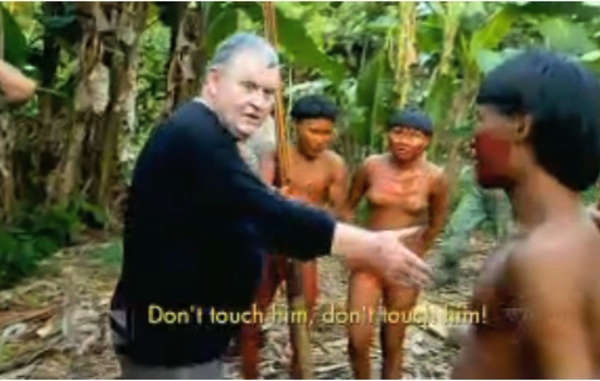
Outrage at ‘Freakshow TV’ as reporter brands Amazon tribe child murderersAn Australian TV report which branded an Amazon tribe as child murderers; a ‘suicide cult’ from the ‘Stone Age’; and the ‘worst human rights violators in the world’ has become the first target of a new Survival campaign against the racist depiction of tribal people on TV.

The ‘Freakshow TV’ campaign aims to challenge the depiction of tribal people on TV as primitive, backward savages.

The broadcast on Australia’s Channel 7 Sunday Night show featured ‘adventurer’ Paul Raffaele and reporter Tim Noonan visiting Brazil’s Suruwaha tribe.

The Suruwaha have already been targeted by fundamentalist missionaries, who falsely say they regularly kill newborn babies. The missionaries have lobbied Brazil’s Congress to pass a law allowing Indian children to be removed from their families.
And:Survival’s Director Stephen Corry said today, ‘It’s freakshow TV at its very worst. The Indians are made out to be cruel and inhuman monsters, in the spirit of 19th century colonialist scorn for ‘primitive savages’. It’s clearly designed to have the same effect – to suggest that they don’t deserve any rights. The idea that such nonsense is supposed to help tribal children is breathtaking.’

Survival has written a set of ethical guidelines to help filmmakers work responsibly with tribal peoples. It is also using its Stamp it Out campaign to challenge racist depictions, however unwitting, in the media.

Note to Editors: Forms of infanticide are found in all societies, including industrialized ones. The practice is rare and dying out amongst Amazon Indians. Survival opposes non-consensual practices, however ‘traditional’, which hurt or kill people. This includes infanticide.
The source for this posting, including videos:

Amazon's ancient tribe

Comment:  I gather the Australian show is called Sunday Night. And "Freakshow TV" is the name of Survival International's campaign against such shows.

For more on Amazon Indians, see Morcegos in The River and Brazilian Indians Protest Site Conversion.

Below:  "Paul Raffaele said a Suruwaha girl refused to shake his hand because she wanted to kill him. In fact, he was wearing so much sun cream the Suruwaha thought he had a skin disease."

Navajo teen humiliated over pregnancy

ACLU: Pregnant Teen Humiliated At School

Mom: School Director Announced Teen's Pregnancy At AssemblyThe American Civil Liberties Union has filed a lawsuit on behalf of a 15-year-old Navajo girl who said she was kicked out then humiliated at a Bureau of Indian Affairs boarding school because she was pregnant.

Vicky Hicks, eighth-grader Shantelle Hicks' mother, said when she told the boarding school her daughter was pregnant back in October, administration said she was no longer welcome there "due to the fact she's a bad example to other female students."

After getting an attorney involved, Vicky Hicks said her daughter was allowed back in school. But soon after, Shantelle Hicks said she was publicly humiliated in a school-wide assembly.

The lawsuit filed Tuesday on behalf of Shantelle Hicks, who attends Wingate Elementary School in McKinley, N.M., said she was publicly embarrassed at an assembly by the school director and another staff member over her pregnancy.

According to the complaint, Shantelle Hicks was forced to stand before the entire school at an assembly while they announced that she was pregnant, even though only three school staffer members knew.
Comment:  We don't know if the school humiliated Hicks because she's Navajo. Or if it would humiliate anyone as part of the right-wing war on women sweeping the country.

My guess is that incidents like this happen more often to minority students. Americans think they're more "shameful" than white girls who do the same thing.

For more on the subject, see Cherokee Teenage Pregnancy Film.

March 05, 2012

Stopping Whiteclay won't stop alcoholism

I haven't reported on the recent Whiteclay lawsuit because I'm not sure it qualifies as pop culture. But this op/ed piece on the subject caught my eye:

The $500 million Whiteclay lawsuit and a wide spot on the road called Swett

By Stew MagnusonI won’t presume to know what the true intentions of the Oglala Nation’s tribal leaders were when they filed the $500 million lawsuit seeking damages from the beer sellers in Whiteclay, Nebr., along with the distributors and brewers.

If they wanted to bring attention to the problem of chronic alcoholism on Pine Ridge where alcohol is prohibited, and the lack of resources being put toward the problem, then kudos!

In that respect, the lawsuit has already been a resounding success. I opened up the print edition of the Washington Post last week, and found the AP lawsuit story on page 2. USA Today, and other media outlets have picked up on the story. More importantly, eastern Nebraska newspapers have Whiteclay on their front pages again.
That's what's happening now. But Magnuson notes another location called Swett where Indians can buy alcohol even if Whiteclay is shut down. Here's what he concludes about the lawsuit:As far as making an impact on the real problem, that remains to be seen. If the tribe prevails, and wins a big chunk of money—and if that money is put toward effective and proven alcohol treatment programs, then it could help reduce the substance abuse rates on Pine Ridge. Or, if the brewers agree to build and fund a substance abuse center as a settlement, that would be a positive outcome.

Those are big “ifs,” though.

If through the lawsuit, the tribe manages to reduce the number of Whiteclay licenses, curtail the sale of beer there, or actually get the four stores shut down, it won’t result in a single sober day for a single person on Pine Ridge.

Why? The answer is Swett.

The shabby little town of Whiteclay is a symptom. The disease is drug and alcohol abuse.

Prohibition on Pine Ridge is not a treatment. It’s like a doctor entering the room of a cancer patient and telling him: “I don’t want you to have cancer.” Then expecting the tumor to magically go away.

Banning the possession and sale of booze on Pine Ridge as the Oglala Nation’s main policy to tackle alcoholism is an abject failure. Build a 20-foot high fence around Pine Ridge, fill up a moat with alligators and sharks, quadruple the number of cops, and give bootleggers the Death Penalty. None of that will help a chronic alcoholic get well and stop drinking.
Comment:  In 2010, various parties sued Whiteclay's beer sellers for a treaty violation. As far as I know, that lawsuit went nowhere.

As for this lawsuit, I tend to agree with Magnuson's views. It's a great publicity stunt, but I don't think it has a chance of winning. Prohibition won't do much good by itself; what Pine Ridge needs is a comprehensive strategy against substance abuse.

For more on Whiteclay, see Whiteclay = Genocide? and Whiteclay Protests Are "Wildly Ineffective."

Teenager thinks Indians get free ride

With the Supreme Court set to review affirmative action policies in higher education, here's a timely posting.

Since the my.hsj.org website is for high-school journalism, I presume the author is an immature teenager who wasn't alive for Clinton's impeachment, much less the Civil Rights movement. Here's her take on AA and my response:

Discrimination in Reverse

By Emily FishmanAt the time of its incep­tion Affirmative Action was a necessary measure to pro­tect minority rights. Rac­ism, prejudice and big­otry abounded in America among people from almost all sectors of society; there­fore, the United States govern­ment's forward thinking and action was significant in sig­naling to the country that all people should have and would be guaranteed equality.

These days however the United States is a drastically different place in terms of social and cultural accep­tance and blindness to differ­ences in race. Affirmative Ac­tion is an outdated program that continues to pander to and give minorities wildly exorbitant benefits regardless of merit and is blind to the changed at­titudes of United States citizens.

People constantly hear that for race to cease to be an issue, it must be completely ignored, yet we in America still fund and support a policy that under­scores the differences among people. African Americans and Native Americans appear to have total equality under the law in America—what Affir­mative Action does is instill the idea that minorities are not actu­ally just normal people, they are somehow inferior and thus need extra help to succeed and be on the same level as everyone else.

One of the most exasper­ating aspects of Affirmative Action is that it not only gives preferential treatment to minori­ties, but also gives the impres­sion that it hinders the ability of those not affiliated with an Affirmative Action endorsed minority to achieve success. If someone is part of a Native American tribe, his chances of acceptance into an Ivy League institution are markedly higher than the white student in his class in terms of GPA and aca­demic record; but because the Native American's ancestors were discriminated against sev­eral decades ago, the eighteen year old white student must pay.
Comment:  The typical Native American student will have overcome huge obstacles to get to the Ivy League starting line. Huge obstacles that the typical white student didn't face.

If there's any affirmative action in admissions left--a doubtful proposition--it'll do what it's supposed to do. Namely, give the Native student a small boost to compensate for the many advantages the white student already has.

Your presumption that racial discrimination is gone just because it's against the law is naive and ridiculous. AA levels the playing field that's still badly tilted against minorities.

For more on the subject, see "Save the White Race!" Sticker and Affirmative-Action Bake Sale.

March 04, 2012

Apaches in John Carter

As you may recall, I wrote about the Native stereotypes in Edgar Rice Burroughs's seminal A Princess of Mars:

Barsoom = Indian territory
Stereotypes in A Princess of Mars

I was curious how the new John Carter movie would handle the Native element. The answer is...very well.

'John Carter' 10-Minute Teaser Focuses on Taylor Kitsch's Character on Earth (Video)


The scene opens in the Arizona Territory, where an unkempt John Carter enters a ramshackle saloon. He tries to buy supplies with a piece of gold he says he found in a cave.

Right away the vibe is radically different from the book's. Carter isn't a pioneer heading into the "untamed" territory to prospect for gold. The land is already colonized, with white settlers on farms and the US Army protecting them. Carter is clearly an outsider who follows in the white man's wake, not a trailblazer. He isn't responsible for what's happened.

Moreover, he isn't planning to take the Indians' land and turn it into his own private wealth generator. He's a scavenger who finds things, not a developer who creates and destroys them. He's living with the land like an Indian, not trying to own it like a white man.

Colonel Powell takes Carter, who's a decorated war hero, into custody. Powell wants to Carter to help him against the Apache, who are attacking homes. Carter says he doesn't care about either side. Warring is man's natural state, so let them fight.

Again, this is a far cry from the book's John Carter, who was explicitly an Indian fighter who killed the Sioux. The movie's Carter is neutral, not an agent of the white man.

Meeting the Apache

Carter escapes and flees with the cavalry in pursuit. They come up against a line of Apache warriors, who look reasonably authentic, on horseback. Speaking their language, Carter seems to negotiate with them (at the 7:50 mark).

So this Carter has had dealings with the Apache. He knows them well enough to speak their language. And they know him well enough to listen respectfully. Again, that's radically different from the approach of Carter the Indian fighter.

But a nervous soldier shoots an Apache and the negotiations are off. (The white men initiate the violence, not the Indians.) Understandably angered, the Apache chase Carter and Powell.

The men hide among some rocks. Carter says something about a Spider Cave. The Apache approach the spot to attack...but then back off. Carter looks up at something as the clip ends...perhaps a giant spider?

So it seems the Apache didn't back off because of their superstitious fear, as they did in the book. They may have known the spot was dangerous. Indians as rational men, not fearful savages...one more radical difference.

All in all, this is a textbook example of how to update racist material to make it acceptable in today's world. The Apache don't do anything to make themselves sympathtic. They're still the nominal antagonists, attacking people without explanation. But the movie humanizes them by showing they're willing to listen first and attack later. They aren't mindless savages like a previous generation of movie Indians.

The cast includes:

Akima--Apache Leader
Joseph Billingiere--Apache #1
Aldred Montoya--Apache #2
Kyle Agnew--Stable Boy

So the casting is reasonably authentic too. The movie may bomb, but not because of its Native aspects. If every movie handled Indians this well, we'd have trouble accusing Hollywood of racism.

For more on the subject, see The Best Indian Movies.

Wannabes obscure real Indians

Wanting To Be Indian

By Myke JohnsonOne of these traps I refer to as “wanting to be Indian.” In fact, American Indians have a name for people in this trap, the Wannabe Indians. This trap is an identification with the Indians, most likely out of our own distress or oppression, our disenfranchised desire. Indians become the “utopic other” holding the dreams we wish were true, whatever they may be. And here the romantic stereotypes take over. So for example, we might say, “In tribal cultures…women were held in respect.” “In tribal cultures…everything was shared communally.” “In tribal cultures…people lived in harmony with the earth.” And so on, filling in the blanks. We desire that utopia, want to be those romanticized Indians.

The other similar trap I call “guilt seeking redemption.” In this trap, we are aware of and acknowledge what White culture has done and reject that, but get stuck in the feeling of guilt. We desire release from the guilt of association with White culture. And so we seek out Indians to say we’re okay, to offer forgiveness, and welcome us, adopt [us] into their own better ways.

We can see an example of this trap in current movies about Indians. Movies went from those portraying Indians as the bad guys who threatened the survival of the White heroes, to a movie like “Dances with Wolves,” where the White hero is the exception to the destructiveness of White culture, and is adopted by the Indians. This trap explains the appeal of an Indian like Sun Bear who taught spirituality to White people, and started a non-Indian entity called the Bear Tribe. He was considered a sell-out by many traditional Native people. However, many White people felt welcomed and assumed a new identity as “tribal” members of a so-called Rainbow Tribe.

What are the problems with these three traps?

First of all, this redemption we find is really a cheap grace. It makes us feel better but doesn’t transform the situation of Native peoples. The injustices keep happening.

Secondly, by denying the spiritual and political autonomy of Indian people, the New Age “rainbow” people subvert whatever good intentions they may have about multicultural community. What gets created is multicultural white middle class dominance in yet another form.

Thirdly, these options perpetuate the fantasy image of the Indian, and distort the real picture. They prevent us from seeing the real lives of Native people. They obscure and drown out their voices and expression of self.
Comment:  For more on the subject, see Mythical Indian = "National Mascot" and Americans = Wandering Strangers.

March 03, 2012

Bitch Media interviews Arigon Starr

I've posted many items on Arigon Starr and her Super Indian comics over the years. These interviews cover some old ground but also provide new information. I'll share a few tidbits from them.

Beyond the Panel: An interview with Arigon Starr of Super Indian, Part OneRMJ: How did you get into comics?

AS: I grew up on comics and by the time I was old enough to hold a crayon, I was drawing them. When I say “comics” I mean the Sunday funnies, “Archie,” “Mad,” “Creepy” and “Eerie,” plus the worlds of DC and Marvel. Will Eisner, Jack Kirby, Dave Gibbons, Neal Adams, John Byrne, Berni Wrightson, and Mort Drucker are some of my all-time favorite artists and gave me lots of inspiration.

RMJ: What drew you to the superhero genre?

AS: The thing I love about superhero stories is someone normal transforming into the extraordinary. How would Wolverine or Wonder Woman be different if they came from an Indian nation? The superhero genre lets you explore the fantastical and have fun while you’re doing it.

RMJ: Technology and nerd culture is a big part of Super Indian what with Tillie's tech geeking, Hubert's blog, Uncle Chester's radio show, the Leaning Oak fan girl club, and the regular Star Wars, Star Trek, and Battlestar Galactica references.

AS: I really wanted to show folks this side of Native America. I know I’m not the only Native American who’s attended a comic convention, watched every Battlestar Galactica episode, or debates the worthiness of the Chakotay character on Star Trek: Voyager. Geek culture is alive and well in Indian Country!

RMJ: What would you like people to learn about Native American culture from Super Indian?

AS: I want people to know that Native people exist and thrive in the contemporary world. Generally, Native folks are stuck in amber, always on horseback wearing leather and feathers. Often, we’re depicted as magical shamans or hyper-alert scouts. Even comics like “Scalped” have us looking like rejects from The Sopranos. We’re more than that.
Beyond the Panel: An interview with Arigon Starr of Super Indian, Part TwoRMJ: Super Indian began as a radio series broadcast in 2007 and then made the jump to the web in 2011. Can you tell us a little more about the journey this character has made?

AS: As with a lot of enduring projects in my life, it all started as something that made me laugh. The characters were there from the start—a buffed-out Native American super-hero with a goofy, butterball sidekick and a broken down car.

RMJ: The webcomic community tends towards being overwhelmingly white and male. How do you experience being Native and a woman in an industry that can be racist and sexist?

AS: Right now, I’m invisible. However, that’s partly by choice. It’s taken a long time to get to the point where I feel like “Super Indian” is worthy of a significant promotional push. Now that I’ve got almost a year’s worth of work online, I’m feeling better about it.

RMJ: You’ve got an impressive career that stretches over several media—comics, film, television, and music. Can you tell us a little about your current projects outside of Super Indian?

AS: “Super Indian” has taken priority in my career at the moment. However, I’m working on a new play and still doing gigs around the country. I’ll be heading up to Nez Perce country soon to perform at Lewis & Clark College and work with some of their community on producing new radio/audio theater plays. I’m also collaborating with one of my favorite writers Robert J. Conley on a couple of projects.
Comment:  Arigon Starr told me that Bitch Media contacted her after reading about her on my blog. Arigon may have meant my Blue Corn Comics page on Facebook, since I mentioned her more recently there. Either way, I did my part by sharing the Native news.

For more on Arigon Starr, see SUPER INDIAN Webcomic and Frybread Queen at University of Montana.

Below:  Arigon's self-portrait.

Narragansetts use film to educate

Tribe's film, education tools offer new perspective

By Cassidy SwansonNods to the Narragansett Indian Tribe are present all around Rhode Island.

Towns, streets, bodies of water and islands take their names from Narragansett words. Local favorites like jonnycakes, quahog chowder and strawberries are all traditional Narragansett foods. But in terms of their culture, many Narragansetts feel that, in their tribe’s home state, they are invisible.

Thanks to a grant from the Rhode Island Council on the Humanities, the tribe hopes to be given greater recognition in the state. The grant paid for the creation of a curriculum to be used in conjunction with the film, “Places, Memories, Stories & Dreams: The Gifts of Inspiration.”

Narragansett Lorén Spears, executive director of the Tomaquag Indian Memorial Museum in Exeter, hopes the new material will help educate local youth about the Narragansetts—something she did not have when she was in school.

She remembers “being in a history class during my elementary days and actually reading that I supposedly didn’t exist, that my family didn’t exist, that my people didn’t exist,” Spears notes in the curriculum.

The film features traditional Narragansett stories and historical recollections of Paulla Dove-Jennings (native name SunFlower), a tribal elder and nationally recognized Native American storyteller. The film’s six segments, as told by Dove-Jennings, are broken down in the 43-page curriculum—available for free download on the museum’s website—in a such a way that teachers can apply the lessons of the stories to the classroom. It includes questions, worksheets and evaluations to go along with each section.
Comment:  For more on the subject, see Truth vs. Twilight and 70% Think Indians Are Extinct.

Below:  "Lorén Spears, executive director of the Tomaquag Museum in Exeter, is pushing for a greater focus on the culture of the Narragansett Indian Tribe in Rhode Island schools."

Indians need more Cowbell

I'm so glad President Obama finally signed the Cowbell settlement.


More Cowbell money for NDNs!!

For more on the subject, see Cowbell Settlement Is No Victory and Obama Signs Cowbell Settlement.

March 02, 2012

"Digger" shows promote archaeological looting

'Diggers,' 'American Digger' TV Shows Said To Promote Looting Of Archaeological SitesArchaeologists are mounting a campaign against two new cable TV shows that they say encourage and glamorize looting of American archaeological sites.

On 20 March, Spike TV will premiere a new show called American Digger, while a show called Diggers on the National Geographic Channel made its debut 28 February. Both shows "promote and glorify the looting and destruction of archaeological sites," Society for American Archaeology (SAA) President William F. Limp wrote in a message posted earlier this week to the SAA listserv.

The premise of American Digger, which is being hosted by a former professional wrestler, was laid out in a recent announcement by Spike TV. A team of "diggers" will "scour target-rich areas, such as battlefields and historic sites, in hopes of striking it rich by unearthing and selling rare pieces of American history." Similar locales are featured in National Geographic's Diggers. In the second episode, set in South Carolina, Revolutionary War and War of 1812 buttons, bullets, and coins were recovered at a former plantation.

After viewing the first two episodes of Diggers, Iowa's State archaeologist John Doershuk posted a review to the American Cultural Resources Association listserv, in which he lamented: "The most damaging thing, I think, about this show is that no effort was made to document where anything came from or discussion of associations—each discovered item was handled piece-meal."

"It was ironic that they [the show's on-air diggers] are destroying the entire basis of what they're interested in," Doershuk told Science Insider by phone. "These are non-renewable sources. There's only so many of them from these time periods."
Comment:  For more on archaeological looting, see Looters Vow to Keep Looting and Pay-to-Dig Archaeology.

NCAA punishes UND for "Fighting Sioux"

Incredibly, the battle to retire the University of North Dakota's "Fighting Sioux" nickname is still going on. I haven't reported every twist and turn, but here's the latest:

NCAA hands out punishment to North Dakota for use of nickname and image

By Geoff DischerThe NCAA doled out its punishments to North Dakota for resuming use of the Fighting Sioux nickname and logo in a letter addressed to the school’s provost, Dr. Paul LeBel, earlier Wednesday.

The most concern in hockey terms is that UND won’t be able to host a women’s hockey NCAA quarterfinal game.

According to the full release of the letter from the NCAA, further punishments for North Dakota include not being able to host any NCAA championship round. If North Dakota is selected as the lower-seeded team in any championship, the Sioux would be designated as the “home team” but would have to play their matchup at the higher seeded team’s venue.
Comment:  For more on the Fighting Sioux, see UND Foes Chant "Smallpox Blankets" and "Sioux Suck."

Greygrass's one-man plays

“Walking on Turtle Island” and “Ghostlands of an Urban NDN” at the Autry

By Pauline AdamekTwo one-man plays, written by and starring acclaimed actor and storyteller Robert Owens-Greygrass (Lakota*), will run in repertory during March, presented by Native Voices at the Autry.

Rich with contemporary and historical elements, Walking on Turtle Island portrays Indigenous experience through the stories and culture of Turtle Island. Ghostlands of an Urban NDN provides a gritty and humorous look at the conflicting worlds of a mixed-race heritage.
Comment:  For more on the subject, see Native Plays and Other Stage Shows.

Below:  Robert Owens-Greygrass. (Shandon Photography)

March 01, 2012

Umatilla model portrays Pocahontas

Pendleton resident Mariah Watchman competes on 'America's Next Top Model'

By Rob OwenFor one of her first competitions in the new cycle of "America's Next Top Model," former Pendleton resident Mariah Watchman, who grew up on the Umatilla Indian Reservation, had to don the costume of an American icon.

Producers chose for her to portray Pocahontas.

"As soon as I heard what the competition was, I knew that's who I would be," Watchman said from Miami, where she recently bought a home. "I was completely fine with it. There's no one else I'd want more to portray. It's someone everybody knows."

Though only 20, Watchman has been modeling since she was 15 and is accustomed to the famous historical figure coming up when she models internationally.

"Most people don't know about natives and how we live," she said. "When they ask what I am, they always assume I'm Latina. I have to let them know I'm Native American and will say, 'As in Pocahontas.' I always have to refer to her anyway."


Adrienne Keene tells us what's wrong with this in her Native Appropriations blog:

Oh ANTM, where do I even start?: Mariah Watchman and the Pocahontas controversyThe premise of this season of ANTM is a competition between British models and American models (they're scraping the bottom of the barrel after 18 seasons to keep it interesting, I guess), and on the first episode, the models were paired in what was termed a "Culture Clash"--one model from the US and one from the UK, each representing an "iconic figure from [their] individual country." Ok, fair enough.

So here were the pairings:

George Washington vs. Queen Elizabeth
Janet Jackson vs. Scary Spice
Madonna vs. Elton John
Michelle Obama vs. Margaret Thatcher
Andy Warhol vs. Amy Winehouse
Jackie O vs. Princess Diana

and, finally...

Pocahontas vs. John Lennon
And:The choice of the producers to have her portray "Pocahontas" is straight up offensive too. Let's pigeonhole the only Native contestant by forcing her to don an extremely stereotypical outfit and be an Indian. The thing that stood out to me was that Mariah was cast into a race-based role, while the other pairings had plenty of (relatively progressive) race-bending. George Washington, Elton John, Jackie O, and John Lennon (all white) were portrayed by models of color, which I thought was kinda cool. But, because Mariah's heritage is her "exotic" selling point for the show, the producers felt the need to exploit it.

Then the outfit they put on her. Oh the outfit. It looks like they bought it straight off the Pocahottie Halloween page--fake buckskin, primary colored feathers, plains-style beading and designs, braids in her hair. And, the kicker, a tomahawk. Yes, a tomahawk. History lesson, ANTM: Pocahontas was from Virginia, and none of those stereotypes apply to her people. So basically they did what everyone seems to do when they want to "honor" Indians--drew upon every Hollywood Indian stereotype without any regard for historical accuracy, regionality, or how effing racist it is to make the only Native girl basically dress up in blackface.


Comment:  So the Native model's advice to Native women is: People know Pocahontas and think you're Pocahontas, so you might as well dress like Pocahontas. Nice.

I can just imagine Watchman acting out the scene in the photo: ‎"Me hit white man with tomahawk! Me savage Indian warrior! But still sexy Indian maiden!"

I might've expected an Umatilla woman to dress as Pocahontas--a figure from a different culture 3,000 miles away--in the early 20th century. You know, for the ignorant tourists who visited an Oregon reservation seeking teepees, chiefs, and Sitting Bull.

But in 2012, on national TV? No way. This is why everyone expects Native women to be sexy, uh, sex objects. And why they use and abuse these women for their own gratification.

Actually, I might've expected an Umatilla woman with integrity to turn down the stereotypical "princess" role. But I guess that's asking too much of a model hungering for attention.

For more on women dressing up as Pocahontas, see Romney Woman as Indian Maiden and Duke's "Pilgrims and Indians" Party.

Navajo Nation sues Urban Outfitters

Last October, Urban Outfitters was in the news because of its "Navajo" products. The story isn't over yet:

Navajo sues Urban Outfitters over product names

By Felicia FonsecaThe Navajo Nation has sued Urban Outfitters Inc. months after the tribe sent a cease and desist letter to the clothing retailer demanding it pull the "Navajo" name from its products.

The lawsuit filed late Tuesday in U.S. District Court in New Mexico alleges trademark violations and violations of the federal Indian Arts and Crafts Act, which makes it illegal to sell arts or crafts in a way to falsely suggest they're made by American Indians when they're not.

The tribe has about 10 registered trademarks on the Navajo name that cover clothing, footwear, online retail sales, household products and textiles. Tribal justice officials said they're intent on protecting what they believe are among the tribe's most valuable assets.

"The fame or reputation of the Navajo name and marks is such that, when defendant uses the `Navajo' and `Navaho' marks with its goods and services, a connection with the Navajo Nation is falsely presumed," the lawsuit states.
Some legal background:Susan Scafidi, who directs the Fashion Law Institute at Fordham University's law school in New York, said Urban Outfitters could point out the name changes in certain items in response to the tribe's original objections. The "Navajo Hipster Panty" and the "Navajo Print Fabric Wrapped Flask," for example, later appeared on the company's website as "printed" instead of "Navajo."

Other defenses include claiming no likelihood of consumer confusion between an authorized Navajo clothing item and the panty, using alternate spellings of "Navajo" and arguing that the contested product isn't a handicraft, she said.

But she and New York-based fashion lawyer Joseph F. Murphy Jr., agree the trademark infringement is clear. Both pointed to a history in which the Navajo Nation lost real property and now is fighting to protect intellectual property.

"That's what disgusts me about this situation," Murphy said. "I, like many people, thought it would have been resolved. But apparently Urban Outfitters declined to write the big apology and may have to write the big check."
Icewine, Roquefort cheese and the Navajo Nation

By Chelsea VowelThe Navajo Nation has trademark ownership of the name ‘Navajo’, and it has the legal right to stop people from using it to describe products that have not been approved by the Navajo Nation. Just like Urban Outfitters owns the trademark to its name.

Urban Outfitters responded with this back in October:

“Like many other fashion brands, we interpret trends and will continue to do so for years to come,” he said. “The Native American-inspired trend and specifically the term ‘Navajo’ have been cycling thru fashion, fine art and design for the last few years.”

This is true, but won’t save Urban Outfitters from being held accountable for their trademark infringement. “Everyone else does it” is not a legal defence.
Comment:  For more on the subject, see Urban Outfitters Renames "Navajo" Products and Jezebel Surveys "Navajo" Fashions.

Is Chris Brown Native?

Chris Brown, platinum-selling singer and girlfriend beater, recently tweeted:Just found out I'm from the Pamunkey Indian tribe! Wow, thats awesome!Source: Is Chris Brown Native American? Grammy-Winning Singer Tweets Heritage, Names Tribe

I assume that means Brown found a "Pamunkey princess" or the equivalent in his family tree. The situation is probably similar to this one:

Debating Alesandra Nicole's background
Inked model is Pamunkey?

Indians respect women

A Native columnist weighs in on Brown's identity:

Chris Brown--Your Actions Will Show If You Are Really Indian

By Ruth HopkinsIn 2009, Chris Brown physically assaulted his then-girlfriend, pop superstar Rihanna. Following the beating, pictures of a battered, emotionally-devastated Rihanna were plastered everywhere- online and off. After he pled guilty to felony assault, Brown was sentenced to five years of probation and six months community service. Ostensibly, the public’s memory is short because Chris’ proclivity for woman beating appears to have been all but forgotten--or even worse yet, celebrated. He’s at the top of the charts again, and he’s being hailed a comeback kid.

Is Chris Brown really Native? Who knows. He wouldn’t be the first non-Native person I’ve heard claim that their great-grandmother was a ‘Cherokee’ Princess, and he won’t be the last. I hope his claim of Pamunkey heritage isn’t just another ploy to get him more attention and sympathy. In pop culture, Native stereotypes are ‘in’ right now. One only need watch a music video with some non-Native trollop dancing around in a fake warbonnet, or browse the latest ‘Native inspired’ apparel at a local Urban Outfitters to realize that.

If he is, I’d like to see him sincerely embrace his new-found indigenous heritage. We’re more than beads and feathers. I wonder if Chris knows that one of the most famous members of the Pamunkey Tribe is a woman? Cockacoeske (ca. 1640–ca. 1686) was chief of the Pamunkey Tribe for more than 30 years. She was known for maintaining unity, and led several other Tribes besides her own. She played an active role in the Bacon Rebellion, and negotiated with the British crown as well as European colonists. If fact, she was one of the first of the tribal leaders to sign the Virginia-Indian Treaty of 1677 and 1680. If Cockacoeske were alive today, I bet she’d give Mr. Brown the scolding of his life.

Today the Pamunkey people are highly involved in preserving their culture and natural resources. If Chris genuinely possesses Pamunkey ancestry, it is his duty to support his people in their endeavors. Additionally, Native women experience the highest rate of violence among any other group in the United States. I suggest that Chris find the true road to redemption by turning attention to the plight of native women, as well as women everywhere, who fall prey to domestic violence.
Comment:  Answer to the title question: No, Brown isn't Native. He's not an enrolled member of a tribe. He wasn't raised Native. And he would've said something before now if he had a significant amount of Native "blood"--a quarter or more.

For more on Native identity questions, see Winddancer Called a "Cultural Thief" and Natives Aren't Vanishing in Census.

Republicans = Whigs

Fractured Republican Party Could Go the Way of the WhigsWhy did the Whigs fall apart?

They were, like the modern Republicans, an uneasy coalition of pro-business individuals on the one hand and religious revivalists on the other. Then, as now, the division was geographical and social: Northern business interests on the one hand and the Southern, pro-slavery group on the other. Meanwhile, two of its most influential leaders--Henry Clay and Daniel Webster--both died, leaving a void that, in the end, no one could effectively fill. (Clay had served as senator, secretary of state and Speaker of the House; Webster had served in the Senate and also as secretary of state.) With the compromise of 1850, the party split along pro- and anti-slavery lines and was, like Humpty Dumpty, irreparably broken.

If this sounds familiar, it should. Today's Republican Party finds itself divided between a pro-business faction on the one hand and religious revivalists on the other. The latter faction finds most of its strength in the South and, to some extent, the Midwest. It's also dominated by white males. As in the 1850s, the party is bogged down by social issues, in this case contraception, same-sex marriage, military service for women and gays, etc. There's nothing like the overarching issue of slavery, which was an economic as well as a social consideration. Nevertheless, the passions associated with these modern issues are rising and may soon approach those once associated with slavery.

Moreover, the Republican Party leadership--like the Whig Party leadership a century and a half ago--is in shambles. The ideologues are busy rummaging through trash cans in a vain search for purists, attacking anyone who deviates a centimeter from their agenda and extracting absolute pledges from candidates that fall just short of swearing on their mothers' graves. The party's leaders? Apart from Romney, they're a motley crew who would have been benchwarmers (or batboys) for the party in its heydey: Gingrich is a disgraced former House Speaker, Santorum suffered the most humiliating defeat ever by a Republican senator, and Paul is a refugee from another party.
News flash:  Republicans adopt a new mascot (below) to replace the elephant. It represents the business and religious nuts trying to coexist.

It also signals that the GOP won't take pollution, the environment, or science seriously. "Tommy the Two-Headed Trout proves all that bio-geno-stuff is a fraud," said one fanatic. "God can create a new animal whenever he wants to."

For more on conservatives, see Santorum Blind to America's Sins and Republicans Want to "Keep America America."